
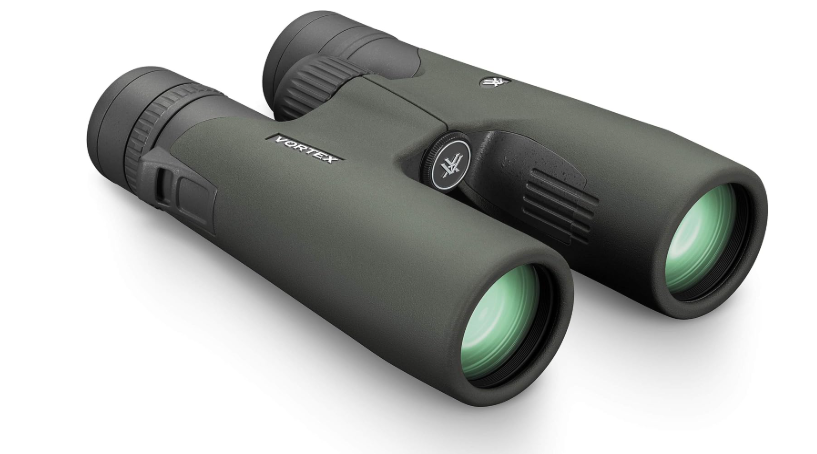
A whale surfaces beyond the rail, a seabird skims across the water, and a distant coastline slowly comes into view. With the best Cruise Ship Binoculars, those fleeting sights can become much easier to follow. The challenge is finding a pair that stays useful when the ship is moving, the weather changes, and you may be carrying them from one deck to another.
Cruise viewing puts different demands on binoculars than ordinary sightseeing. Higher magnification can reveal more distant detail, but it can also make ship movement harder to manage. Wide fields of view, weather protection, comfortable handling, and even the weight around your neck can matter when you are watching for wildlife or scanning the horizon.
In this guide, we compare the best Cruise Ship Binoculars for wildlife spotting, whale watching, scenic cruising, and everyday deck use. You’ll also find practical advice on the features that matter most at sea, plus tips for keeping your binoculars clean and ready throughout the trip.
Best Cruise Ship Binoculars
1) Nikon Monarch M5 Binoculars
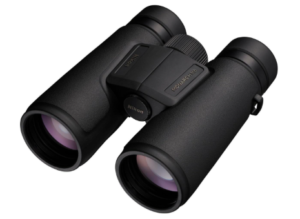
Clear, detailed views are a big part of what makes binoculars worthwhile on a cruise, especially when you’re watching for whales, seabirds, distant vessels, or a coastline coming into view. The Nikon Monarch M5 8×42 uses ED glass to reduce chromatic aberration, while its dielectric prism coatings help produce bright, natural-looking images. Its 8x magnification also provides useful reach without being as demanding to hold as a 10x model.
With 42mm objective lenses and a 335-foot field of view at 1,000 yards, the Monarch M5 gives you enough width to scan open water while bringing distant subjects closer. The 19.5mm eye relief also makes it a practical choice for glasses wearers, while the adjustable eyecups help you find a comfortable viewing position during longer sessions.
That balance makes the Nikon Monarch M5 a strong option among the best Cruise Ship Binoculars, particularly if optical clarity matters more to you than maximum magnification or an exceptionally wide field of view. However, 8x magnification does not eliminate the effects of a moving ship. On a swaying deck, keeping a whale, bird, or distant vessel centered can become more difficult without additional support.
A seated position or other stable surface can make longer viewing sessions easier, while a compatible tripod provides even more stability. The Monarch M5 is also waterproof and fogproof, and its rubber-armored body provides a secure grip in damp conditions. At 22.2 ounces, it remains manageable to carry around the ship, although extended handheld viewing can still become tiring.
The Monarch M5 is therefore particularly well suited to cruise passengers who want strong optical performance and expect to spend some viewing time from a stable position.
Features
- 8×42 configuration
- ED glass
- Dielectric prism coatings
- 335-ft field of view
- 19.5mm eye relief
- Waterproof and fogproof
- Rubber-armored body
- Tripod adaptable
Pros
- Clear, natural images
- Glasses-friendly
- Balanced 8x magnification
- Marine-ready protection
Cons
- Difficult on moving decks
- Can cause handheld fatigue
2) Celestron TrailSeeker ED 8×42 Binoculars
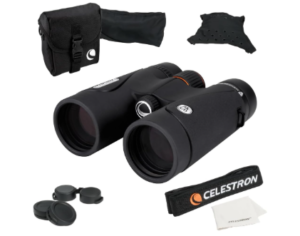
The Celestron TrailSeeker ED 8×42 stands out for its unusually wide 426-foot field of view at 1,000 yards, giving cruise passengers more room to scan open water for whales, seabirds, distant vessels, and coastal scenery without constantly repositioning the binoculars.
That broad view works particularly well with the 8x magnification. You still get useful reach for distant subjects, while the wider viewing area makes it easier to locate and follow something once you’ve spotted it. ED objective lenses help reduce chromatic aberration, while phase- and dielectric-coated BaK-4 prisms and fully broadband multi-coated optics support bright, detailed views in changing light.
For passengers who spend long periods watching the horizon, the TrailSeeker ED also offers useful comfort and weather protection. Its 17.2mm eye relief suits glasses wearers, while the large focus knob allows precise adjustment without much fuss. The waterproof, nitrogen-filled construction adds protection when you’re dealing with sea spray, humidity, or changing weather on deck.
The wide field does not completely solve the challenge of viewing from a moving ship, though. A passing whale or bird can still be difficult to keep centered when the deck is swaying, particularly during unsupported handheld viewing. At 23.5 ounces, the TrailSeeker ED is also a substantial full-size binocular rather than a lightweight option for carrying around all day.
The included neck strap, carrying harness, and padded case make it easier to keep the binoculars accessible throughout a day on the ship. This makes the TrailSeeker ED a good fit for cruise passengers who prioritize a broad viewing area and expect to spend time deliberately observing wildlife or scenery. If you mainly want quick, lightweight viewing while walking the deck, a more compact binocular may be easier to carry.
Features
- 426-ft field of view
- Phase-coated BaK-4 prisms
- 17.2mm eye relief
- ED objective lenses
- Waterproof and fogproof
- Magnesium alloy body
- Tripod adaptable
Pros
- Wide field for scanning
- Sharp, detailed images
- Glasses-friendly
- Useful carrying accessories
Cons
- Relatively bulky
3) Steiner 7×50 Marine Binoculars
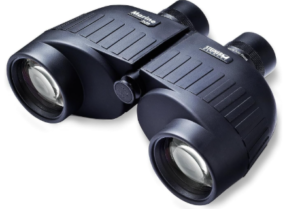
The Steiner 7×50 Marine takes a purpose-built approach to the best cruise ship binoculars category. Its 7x magnification is easier to steady on a moving ship than higher-powered options, while the 50mm objectives support bright views across open water and in changing light.
That 7×50 configuration makes particular sense at sea. You often need to scan a wide horizon rather than zoom in on a single distant point, and the lower magnification is less demanding when the deck is moving beneath you. The 20.2mm eye relief also gives glasses wearers plenty of room for comfortable viewing.
Steiner’s Sports Auto-Focus system adds another advantage when tracking moving subjects. Once calibrated, it maintains focus from around 20 yards to infinity, reducing the need for repeated focusing as birds, marine life, or vessels move across the view.
The marine-first construction reinforces that purpose. A rubber-armored Makrolon housing, Floating Prism System, and waterproof design provide protection against knocks and moisture around the ship. Rather than simply adding weather resistance to a general-purpose binocular, Steiner has designed this model around the demands of marine viewing.
Features
- 7×50 configuration
- Sports Auto-Focus
- 20.2mm eye relief
- BaK-4 prisms
- Multi-coated optics
- Waterproof construction
- Rubber-armored housing
- Floating Prism System
Pros
- Steady 7x view
- Bright marine viewing
- Easy subject tracking
- Rugged build
Cons
- Heavy and bulky
4) Vortex Diamondback 8×42 Binoculars
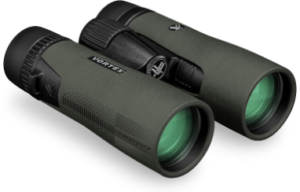
Cruise binoculars do not always stay in your hands. You may carry them between decks, pull them out for a quick look at the shoreline, or keep them ready for unexpected wildlife sightings. The Vortex Diamondback 8×42 suits that kind of use with a GlassPak harness, rubber armor, and a practical 21.8-ounce weight that keeps it manageable throughout the day.
The GlassPak harness is particularly useful when you’re moving around the ship because it keeps the binoculars accessible without requiring you to carry them by hand. Argon purging and O-ring seals also protect the internal optics against water and fog, while the exterior lens coatings help guard against scratches, oil, and dirt.
When you settle in for a longer viewing session, the Diamondback HD’s optical system becomes more important. Its HD glass elements are designed to reduce chromatic aberration and improve color fidelity and sharpness, while fully multi-coated optics and dielectric prism coatings support light transmission. The 393-foot field of view at 1,000 yards also gives you enough coverage for scanning the water without matching the exceptionally wide view of the Celestron.
Mounting flexibility adds another layer of practicality. The binoculars are tripod adaptable, allowing you to move from casual handheld viewing to a supported setup when you want a steadier view. This can be useful during longer observation sessions, particularly when you’re watching distant wildlife or scenery from a moving deck.
Taken together, the carrying system, manageable weight, and mounting flexibility make the Diamondback HD well suited to a cruise where binoculars may need to serve several purposes throughout the day. It can handle quick sightseeing between activities while still giving you the optical performance and support options needed when you settle in for more deliberate viewing.
Features
- Dielectric prism coating
- Armortek lens coating
- 8×42 configuration
- 393-ft field of view
- Waterproof and fogproof
- GlassPak harness
- Tripod adaptable
- HD glass elements
Pros
- Easy to carry
- Rugged protection
- Good optical performance
- Harness included
Cons
- No image stabilization
- Handheld viewing can be affected by ship movement
5) Hontry 10×42 Binoculars with IPX7 Waterproof Protection
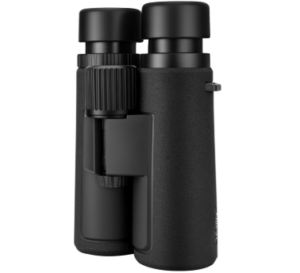
Hontry 10×42 binoculars take a high-magnification approach to cruise viewing, giving you 10x power with 42mm objectives for bringing distant whales, seabirds, vessels, and shoreline details closer. That extra reach comes with a narrower 288-foot field of view at 1,000 yards, so finding and following moving subjects can require more repositioning.
The difference becomes more noticeable on a moving ship. Higher magnification makes hand movement and deck motion easier to see, which can make prolonged unsupported viewing tiring. The 4.2mm exit pupil and 15mm eye relief also leave less room than some of the larger-eye-relief options in this lineup, particularly for glasses wearers.
Water protection is one of the more practical strengths here. The IPX7 waterproof rating allows the binoculars to withstand temporary immersion, while nitrogen filling helps protect against internal fogging. The rubber-armored body adds grip, and a tripod connection gives you the option of switching to supported viewing when 10x magnification becomes difficult to hold steady.
At 1.59 pounds, the binoculars are not especially light, but the included harness-style carrying bag can keep them accessible while you’re moving around the ship. The 10x power also provides extra reach without requiring the much larger body associated with some higher-magnification binoculars.
When comparing the best Cruise Ship Binoculars, the Hontry’s 10x reach can help you pick out details on a distant shoreline or examine wildlife farther from the ship. The narrower field and greater sensitivity to movement, however, call for more deliberate handling than the 8x models, especially from an active deck.
Features
- Tripod adaptable
- Nitrogen-filled
- 288-ft field of view
- 4.2mm exit pupil
- 15mm eye relief
- IPX7 waterproofing
- Rubber-armored body
Pros
- Strong 10x reach
- IPX7 protection
- Tripod compatible
- Carrying harness included
Cons
- Narrower field of view
- More sensitive to movement
How to Choose the Best Cruise Ship Binoculars
Here are some of the key factors to consider when choosing binoculars for a cruise.
Magnification and Stability
More magnification is not automatically more useful from a cruise ship. A distant whale may look closer through 10x binoculars, but the same magnification also makes hand movement and ship motion more noticeable. Marine binoculars commonly favor lower magnification for this reason.
For cruise use, 7x and 8x models generally offer a good balance between reach and steadiness, while 10x can provide extra detail when viewing from a stable position. If you expect to spend most of your time on exposed decks or moving around the ship, a steadier view may be more useful than additional reach.
Field of View
Spotting something is only half the job. Once a whale surfaces, a seabird crosses the water, or another vessel enters the scene, you also need to keep track of where it is. A wider field of view shows more of the surrounding area, making it easier to locate and follow moving subjects. Higher magnification often comes with a narrower field, so the two specifications are worth considering together rather than choosing magnification on its own.
Weather Protection
Cruise decks can expose binoculars to considerably more moisture than a typical sightseeing trip. Sea spray, rain, mist and humidity can all become part of the viewing experience, particularly on exposed decks.
Waterproof construction helps protect the internal optics, while nitrogen or argon purging can help prevent internal fogging when conditions or temperatures change. Rubber armor is another useful addition because it can improve grip with wet hands while providing some protection against knocks.
Weight
The binoculars you leave in your cabin cannot help when a whale suddenly appears.
Cruise viewing often involves carrying binoculars between decks, keeping them ready during scenic passages, or wearing them while waiting for wildlife to surface. Larger models can offer advantages in brightness and optical performance, but their additional weight becomes more noticeable over longer periods.
A lighter pair may therefore suit passengers who move around frequently, while a larger model can make sense when most viewing will happen from one observation area. A comfortable strap or harness can also make extended carrying less tiring.
Eye Relief and Viewing Comfort
The quality of the view means little if getting your eyes into the right position becomes uncomfortable. Eye relief is particularly important for glasses wearers because the distance between your eyes and the eyepieces increases when you keep your glasses on. Longer eye relief and adjustable eyecups can make it easier to see the full field without constantly repositioning your face.
This becomes more noticeable during longer wildlife-watching sessions. For quick looks at passing scenery, however, you may care more about compactness and easy handling than maximizing viewing comfort.
Tripod Compatibility
Not every cruise passenger needs to set up binoculars for prolonged observation. If your typical use involves a quick look at the coastline or a few seconds of wildlife spotting, tripod compatibility may never matter.
The feature becomes more useful when you expect to watch from one position for several minutes. Supporting the binoculars can reduce the effort of holding them steady and can make higher magnification easier to use. Some marine binoculars are specifically designed to accommodate tripod mounting.
Optical Quality
A bright, sharp coastline in midday sun is an easier viewing target than a distant animal against an overcast horizon. That difference is worth keeping in mind when deciding how much optical performance you actually need.
ED glass can help reduce chromatic aberration, while quality coatings and prisms can contribute to light transmission, contrast and image clarity. These refinements become more valuable when you expect to spend significant time studying distant wildlife, vessels or scenery, especially as available light decreases. For occasional daytime viewing, weight, stability and weather protection may have a more noticeable effect on your experience.
Match the Binoculars to Your Cruise
Wildlife-focused passengers may place greater emphasis on stability, field of view and optical clarity, while someone mainly interested in coastlines and passing scenery may value reach and detail. Frequent deck users may prefer something compact and easy to carry, whereas passengers planning longer observation sessions can benefit more from comfortable eye relief and tripod compatibility.
Thinking about these situations before comparing individual models makes it easier to decide which specifications deserve priority. Instead of choosing binoculars simply because they offer more features, you can focus on the characteristics that will actually matter once you’re standing on deck.
Best Cruise Ship Binoculars FAQs
Are Binoculars Worth Taking on a Cruise?
Yes, especially if you expect to spend time watching the scenery or looking for wildlife. Binoculars can bring distant coastlines, islands, seabirds, marine life, and passing vessels into clearer view. The best size depends on how you plan to use them. A compact pair can work well for casual sightseeing. Full-size binoculars may provide a brighter, more comfortable view during longer observation sessions.
What Magnification Is Best for Cruise Ship Binoculars?
For most cruise viewing, 7x or 8x magnification offers a practical balance between reach and stability. These levels provide enough magnification for distant scenery and wildlife. They also make hand movement less noticeable than higher magnification can.
A 10x model can reveal more detail at greater distances, but it generally requires steadier handling. If you expect to use your binoculars mainly from a moving or exposed deck, 8x can be easier to manage.
Are Waterproof Binoculars Necessary for a Cruise?
Waterproof binoculars are not essential for every passenger, but they are useful on a cruise. Moisture can be difficult to avoid. Sea spray, rain, mist, and humidity can all affect binoculars, particularly on open decks.
Waterproof construction can protect the internal optics. Fog-resistant or nitrogen-purged designs can also help prevent internal condensation. If you expect to use your binoculars frequently around the ship, these protections are worth considering.
Are 8x Binoculars Good for Whale Watching From a Cruise Ship?
Yes. 8x binoculars can bring distant whales closer while remaining manageable to hold from a moving ship. A reasonably wide field of view is also important. Whales can surface unexpectedly, making them difficult to locate and follow through a narrow view. For whale watching from a cruise, look beyond magnification alone. Stability, field of view, optical clarity, and comfortable handling can all affect how easily you can spot and track marine life.
How to Care for Your Binoculars on a Cruise
Your binoculars can face more moisture, residue, and handling on a cruise than they would on an ordinary sightseeing trip. Sea spray can settle on the lenses, sunscreen can transfer to the eyepieces, and condensation can appear when you move between warm decks and an air-conditioned cabin.
A few simple habits can protect the optics without turning binocular care into a chore.
Keep Salt Spray Off the Lenses
The open deck is often where binoculars are most useful. It is also where they are most exposed to salt spray.
On windy days, a fine mist can settle on the objective lenses without being immediately noticeable. Keep the objective covers on while walking around or waiting for wildlife. Remove them only when you’re ready to view.
If spray reaches the lenses, resist the urge to wipe them immediately with a dry cloth. Salt and other particles can remain on the glass, and rubbing them across the surface may scratch optical coatings.
Follow a Safe Cleaning Sequence
When your binoculars need cleaning, the order matters more than how often you clean them.
First, remove loose dust and grit. Use a blower or another method intended for optical lenses. Avoid rubbing the surface while particles are still present.
Next, use a suitable lens-cleaning solution if necessary. Apply it to the cleaning cloth rather than directly soaking the binoculars. Follow the manufacturer’s instructions, especially if the lenses have specialized coatings.
Then, wipe gently with a clean microfiber lens cloth. Use light pressure and a clean section of the cloth. Do not keep dragging the same dirty area across the lens.
Finally, inspect the glass. If salt, sunscreen, or fingerprints remain, repeat the process with a clean portion of the cloth. Increasing pressure is not a substitute for a clean surface.
This sequence is particularly useful after a windy whale-watching session or a day spent moving between exposed decks and sheltered areas.
Give Sunscreen a Little Time to Dry
Sunscreen and binoculars often meet when you’re adjusting the focus wheel, folding the eyecups, or passing the binoculars to someone else. The result can be greasy fingerprints across the eyepieces and controls.
After applying sunscreen, let it absorb and dry before handling your binoculars. If you’re sharing them with other passengers, keep a microfiber lens cloth in the case. It gives you a quick way to deal with fingerprints without resorting to a shirt sleeve, tissue, or other unsuitable material.
Let Them Acclimate Before Storage
Moving from a warm, humid deck into an air-conditioned cabin can create a sudden temperature change. That can cause condensation to form on cooler surfaces, particularly when the binoculars have been exposed to humid sea air.
If the binoculars feel damp after coming inside, wipe the exterior and give them time to acclimate before closing the case. Avoid trapping visible moisture inside the case.
The same principle applies when moving between other areas of the ship with noticeably different temperatures. Giving the binoculars a little time to adjust is preferable to immediately sealing them away while damp.
Use the Case and Lens Covers
Your binocular case has an important job on a cruise. It protects the binoculars when you’re moving between decks, eating, going ashore, or taking a break from viewing.
Keep the objective covers attached when practical, and return the binoculars to their case when you’re finished using them. Avoid leaving them loose on a deck chair, railing, or other exposed surface where salt, dust, moisture, or an accidental knock could cause trouble.
These habits take little effort, but they help keep your binoculars ready throughout the trip. After all, the moment you need them may be the moment a whale surfaces, a seabird passes overhead, or a distant shoreline finally comes into view.
Conclusion
A cruise gives you plenty to look at, but some of the most interesting sights are easy to miss. A dark shape breaking the surface, a seabird skimming the water, or a distant coastline slowly coming into view can disappear before you get a second chance to see it clearly.
That is where the best cruise ship binoculars earn their place. You do not necessarily need the highest magnification or the most elaborate optical setup. You need a pair that is comfortable enough to keep nearby, steady enough to use from the deck, and clear enough to make those fleeting moments easier to follow.
Also Read: