
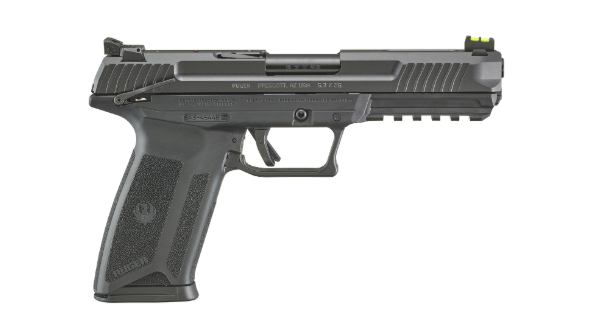
Time to take a look at some of the best Ruger 57 Red Dots, the value they bring and the specifications and features that make each one stand out in today’s market. The Ruger 57 offers an interesting platform for a red dot, and the right optic can add another dimension to the way you use the pistol.
With several sights available, there is more to the decision than simply picking an optic with a bright aiming point. Different models bring their own strengths, from their overall design and sight picture to the way they handle everyday use. That makes a closer comparison worthwhile, especially when you want an optic that complements the Ruger 57 rather than simply adding another accessory to it.
In this guide, we will take a closer look at the options worth considering and what each one has to offer. We will also cover some of the key considerations that can help you narrow down the choices and find a setup that fits your needs.
Best Ruger 57 Red Dots
1) Holosun EPS Full Size Series 2 MOA Sight
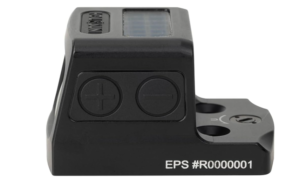
Holosun EPS Full Size Series 2 MOA Sight stands out for its enclosed emitter design, which keeps the LED protected from dust, rain, and debris that can interfere with an open reflex sight.
For a Ruger-57 owner who expects the pistol to see use in less controlled conditions, that added protection can be a meaningful advantage. The aspheric lens also produces a clear, distortion-free sight picture, while the 2 MOA dot offers a fine aiming point without taking up excessive space in the viewing window.
Another useful aspect is its low dot height. The EPS sits low enough to work with most factory iron sights, giving the shooter a backup sighting option rather than making the red dot completely dependent on its electronics.
It uses Holosun’s K footprint and comes with an RMR-to-K adapter plate, which broadens its mounting compatibility and gives the optic more flexibility when working with different pistol setups.
Battery management is another area where the EPS is appealing for a Ruger-57 red dot setup. Its Super LED can run for up to 50,000 hours on a CR1620 battery, while Shake Awake switches the LED off during periods of inactivity and brings it back when movement is detected.
With 12 reticle intensity settings, there is also room to adjust the dot to the surrounding conditions. The 7075 T6 aluminum housing and IP68 dust and waterproof rating round out the package for users who want a rugged enclosed optic rather than a minimalist open-emitter design.
Pros
- Enclosed emitter design
- Low dot height
- 2 MOA reticle
- Up to 50,000-hour battery life
- RMR-to-K adapter included
- IP68 dust and waterproof rating
Cons
- Adapter required for RMR footprint mounting
2) SIG SAUER Romeo-X Enclosed Pistol-Mounted Reflex Sight
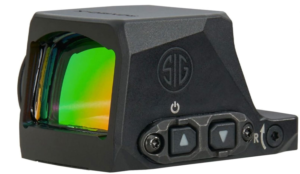
The SIG SAUER Romeo-X Enclosed takes a particularly low-profile approach to pistol mounting. Its deck height is low enough to work with standard-height iron sights, allowing the factory sights to co-witness with the optic. That can simplify the setup while preserving the existing iron sights as a usable backup.
One of the more convenient details comes when the battery needs attention. The CR1632 cell loads through a side-mounted compartment, so there is no need to remove the optic just to replace the battery or re-zero the sight afterward.
MOTAC motion activation further manages power by activating the illumination when movement is detected, with the battery rated for up to 20,000 hours of runtime.
Romeo-X Enclosed also gives the shooter some freedom over the aiming picture. It is available with a 3 MOA dot, 6 MOA dot, or Circle Dot reticle, while 15 illumination settings provide adjustment across different lighting conditions, including three night vision settings.
Underneath those features is a CNC-machined 7075 aluminum housing with a sealed optical system, giving the optic a rugged construction without sacrificing its streamlined pistol profile.
Pros
- Low deck height
- Standard-height iron sight co-witnessing
- Fully enclosed and sealed optical system
- Side-loading battery
- MOTAC motion activation
- Multiple reticle options
Cons
- Footprint compatibility varies by model
3) Leupold DeltaPoint Pro Reflex Sight
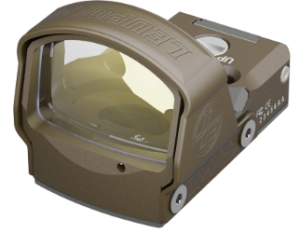
The Leupold DeltaPoint Pro earns a place among the best Ruger 57 Red Dots by emphasizing a clear and useful sight picture. Its wide field of view gives the shooter strong visibility around the aiming point, while the Professional Grade Red Dot Optical System combines high light transmission with glare reduction. The Twilight Red Dot Light Management System further helps maintain visibility as lighting conditions change.
Despite its compact size, the sight weighs 2 ounces and measures 1.8 inches long. That weight deserves attention on the Ruger-57, since Ruger cautions that optics weighing more than 1 ounce may cause short cycling or other function-related issues, particularly with 27-grain ammunition. Additionally, the illuminated reticle and top access battery compartment add practical convenience without requiring the optic to be removed for a battery change.
More importantly, the DeltaPoint Pro brings a rugged build to the package. Its aluminum housing and steel sheath help protect the sight, while advanced sealing guards against moisture, temperature changes, elevation shifts, and shock.
The Motion Sensor Technology also shuts the reticle off after five minutes of inactivity and reactivates it when the sight senses movement, helping conserve battery power.
Pros
- High light transmission
- Glare reduction
- Strong low-light performance
- Lightweight construction
- Top-access battery compartment
- Motion Sensor Technology
Cons
- Open-emitter design
4) Trijicon RMR Type 2 3.25 MOA Red Dot Sight
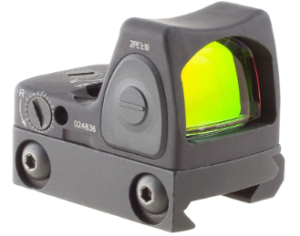
The 3.25 MOA dot is one of the more appealing aspects of Trijicon RMR Type 2 for a Ruger 57 setup. On a pistol such as the Ruger 57, the dot offers a clear aiming point that can be picked up quickly while still remaining fine enough for more deliberate shooting at range. For that reason, it offers a useful middle ground between an overly large dot and a finer reticle that can take longer to locate.
Brightness control is another area where the RMR Type 2 puts the shooter in charge. Eight adjustable settings cover different lighting conditions, including two night vision settings and a super bright option.
Additionally, the sight can switch between manual and automatic illumination modes, while the buttons can be locked out to prevent accidental adjustments from changing the selected setting.
The RMR Type 2 also takes a distinctive approach to impact protection. Its forged aluminum housing is shaped to divert force away from the lens, while ruggedized battery contacts and upgraded electronics are intended to maintain performance under harsh conditions.
Beyond that, the battery conservation mode adjusts the aiming dot to ambient light after 16.5 hours, helping extend battery life when the sight remains active for long periods.
Pros
- 3.25 MOA dot
- Eight brightness settings
- Manual and automatic illumination
- Two night vision settings
- Button lockout
- Forged aluminum housing
- Ruggedized electronics
Cons
- Single reticle option
5) Vortex Venom 3 MOA Red Dot Sight
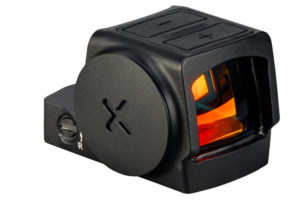
Vortex Venom 3 MOA Red Dot Sight puts a straightforward aiming experience at the center of its design, making it a strong fit for Ruger 57 users who value quick target acquisition without giving up precision.
The 3 MOA dot balances rapid target acquisition with a precise point of aim, while the fully multi-coated lens gives the shooter a wide field of view. Additionally, the dot can run across 10 manual brightness levels or adjust automatically through the ambient light sensor.
Zeroing the sight is also uncomplicated. The Venom uses 1 MOA windage and elevation adjustments, giving the shooter fine control when setting up the optic and making subsequent corrections at the range.
The Venom also keeps routine operation convenient. Its top-loading CR1632 battery can be replaced without removing the sight, and the left-side controls keep power and brightness adjustments accessible.
Meanwhile, the 1.6-ounce weight with the included mount keeps the package relatively light. Battery life reaches up to 30,000 hours at lower brightness settings, while the highest setting reduces that figure to 150 hours.
Pros
- Automatic brightness adjustment
- 1 MOA windage and elevation adjustments
- Top-loading battery
- 1.6-ounce weight
- Wide field of view
Cons
- 150-hour runtime
6) EOTECH EFLX 3 MOA Mini Reflex Sight
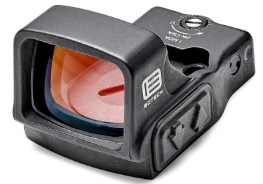
EOTech EFLX Mini Reflex Red Dot Sight stands out first for its large rectangular viewing window. It gives the shooter more space around the aiming point, making the red dot easier to pick up while maintaining a broad field of view. The front glass is clear and distortion free, and unlimited eye relief adds to the open sight picture.
As a compact option among the best Ruger 57 Red Dots, the EFLX is also notably light. The aluminum housing measures 1.9 inches long, 1.2 inches wide, and 1 inch high, with a weight of just 1.4 ounces. Its DeltaPoint Pro footprint provides a defined mounting pattern for compatible setups.
Changing the CR2032 battery does not require removing the optic, thanks to the top loading compartment. A push button switch handles the red LED illumination, with eight brightness settings available for adjustment. The aluminum housing also gives the EFLX a rugged exterior while keeping the overall sight lightweight.
Pros
- Large rectangular window
- Clear front glass
- Unlimited eye relief
- 1.4 ounce weight
- Top loading battery
- Eight brightness settings
Cons
- Open emitter design
Next read: 5 Best Revolver Scopes
Key Considerations When Choosing a Ruger 57 Red Dot
With several options competing for a place among the best Ruger 57 Red Dots, the specifications can start to blur together. Taking time to understand what you need from a sight and which features best complement your setup can make the decision much easier.
With that in mind, here are some factors worth considering before settling on a red dot for your Ruger 57.
Ruger 57 Compatibility
Start with the footprint and mounting pattern. These determine how the optic attaches to the Ruger 57 and whether an adapter plate is needed. The mounting hardware supplied with the sight is also worth checking, as not every optic comes prepared for the same pistol configuration.
Sight height deserves attention as well. A low mounted optic can work alongside the factory iron sights, giving you a backup aiming option if the electronic sight is unavailable. Keeping the optic at a suitable height can also make the overall setup more cohesive.
Size and Weight
A red dot does not need to be large to offer useful performance on a pistol. For the Ruger 57, keeping an eye on weight is particularly important because adding a heavier optic can affect how the pistol cycles. A compact sight can also keep the overall setup more manageable without taking up unnecessary space.
Size is not just about the number on the specification sheet, though. A larger housing may accommodate a bigger viewing window or additional controls, while a smaller optic can produce a more compact profile. The better balance depends on which characteristics matter most for the way you intend to use the pistol.
Emitter Design
The choice between an open and enclosed emitter changes how the optic deals with the environment. An enclosed emitter places the light source inside a protected housing, reducing the chance that dust, rain, or debris will interfere with the dot. That can be particularly valuable when the pistol may be exposed to less controlled conditions.
Open emitter sights leave the emitter exposed, but that does not automatically make them a poor choice. They can offer a straightforward reflex configuration with an unobstructed window and a compact form. The important consideration is how much environmental protection you want from the optic rather than treating one design as universally superior.
Reticle Size and Type
Reticle size has a direct effect on how the aiming point appears through the window. A smaller dot gives you a finer point of aim, which can be useful when you want more precision. Larger dots tend to stand out more readily, making them easier to locate when speed matters.
Reticle type adds another layer to that decision. A simple dot keeps the sight picture uncluttered, while a circle dot or other multi reticle arrangement can give you more than one aiming reference. For a Ruger 57 red dot, the right option comes down to finding a sight picture that is easy to acquire without obscuring more of the target than necessary.
Brightness Settings
The number of brightness levels tells only part of the story. What matters is how easily the illumination can be adjusted when the surrounding light changes. A setting that works well outdoors in bright conditions may be unnecessarily intense in a darker environment, while a dim setting can become difficult to see when the background is brightly lit.
Manual controls give you direct input over the dot, while automatic systems can adjust illumination based on ambient light. Some optics also include dedicated night vision settings. If you expect to use the Ruger 57 across a range of lighting conditions, these differences deserve more attention than simply counting the available brightness levels.
Battery Life and Access
Battery life can vary considerably depending on the illumination setting and how the optic manages power when it is not being used. A long quoted runtime is useful, but it should not be the only figure you consider. Maximum brightness can reduce runtime substantially, so look at how the sight performs across its different settings.
Battery access is just as important. A top or side loading compartment can let you replace the cell without removing the optic, which means you do not have to disturb the mounting position simply to install a fresh battery. For a sight that is expected to remain on the Ruger 57 for extended periods, that convenience can make routine maintenance much easier.
Durability and Weather Protection
Construction becomes more important when a red dot is going to experience repeated recoil, handling, and exposure to the elements. An aluminum housing can provide the structural strength needed for regular use, while additional protection around the lens and electronics can help the sight cope with impacts.
Weather resistance deserves attention too. Ratings for dust and water protection give you a better idea of how well the optic is sealed, but the intended use still matters. A sight exposed to rain, dust, temperature changes, or rough handling needs a different level of protection from one used primarily in controlled conditions.
Look beyond the word “rugged” and check what the construction actually protects against.
Read More:
7 Best Scopes for Benjamin Marauder
Best Ruger 57 Red Dots FAQs
What Red Dot Footprint Does the Ruger 57 Use?
The Ruger 57 is drilled and tapped for optic adapter plates rather than being limited to one built in red dot footprint. The adapter plate determines which optic footprint can be mounted, so you should match the plate to the specific sight you plan to use. Ruger offers factory plates for several mounting patterns, while other compatible plates are also available.
Is An Enclosed or Open Emitter Better for a Ruger 57?
Neither design is automatically better. An enclosed emitter offers greater protection for the emitter against dust, rain, and debris, making it a strong choice if the pistol may be used in less controlled conditions. An open emitter can offer a simple, compact setup with an unobstructed viewing window, which may appeal to users who prioritize a traditional reflex sight configuration.
The better choice depends on the conditions in which you expect to use the Ruger 57. Environmental exposure favors the added protection of an enclosed design, while an open emitter may make sense when simplicity and a compact profile matter more.
Conclusion
Looking across the best Ruger 57 Red Dots, the biggest takeaway is that there is no single configuration that will suit every shooter or every setup. The sights covered here take different approaches to the same basic task, and those differences can matter once the optic is mounted on the pistol.
Some place greater emphasis on protection and a sealed design, while others stand out through their viewing window, low profile, lighter weight, or straightforward controls.
Go back through the options with your own Ruger 57 setup in mind. Compare the sights that best match your priorities, check their mounting requirements and weight, and then focus on the features that matter most for how you plan to use the pistol.
That will help you narrow the field and make a more informed decision without getting distracted by specifications that may not matter to you.