
Looking for the best 4K drones? You have come to the right place. The search can quickly lead you into a sea of impressive cameras, long flight times, smart flight features, and technical specifications. But a 4K label only tells part of the story. The camera behind that resolution, along with stabilization and flight performance, can make a noticeable difference in the footage you actually capture.
Some drones put their emphasis on portability, while others bring larger sensors, more advanced camera systems, stronger obstacle sensing, or longer endurance to the table. That gives you plenty of choice, but it also means the most appealing specifications on paper may not be the ones that matter most for the way you plan to fly and film.
In this guide, we look at the best 4K Drones and what sets each one apart, helping you see where their strengths lie before you make your choice. First, though, let’s take a quick look at what 4K actually means on a drone.
What Is a 4K Drone?
A 4K drone is an unmanned aircraft that can record video at a resolution of 3840 × 2160 pixels. This provides four times the pixel count of 1080p Full HD, giving aerial footage more detail and allowing greater flexibility when cropping or editing.
However, 4K resolution alone does not determine video quality. Frame rate, camera sensor, stabilization, and dynamic range can all affect the final footage. Consequently, two drones capable of recording in 4K can still produce noticeably different results depending on their camera systems and other capabilities.
Best 4K Drones
Now, let’s turn to the drones themselves and see what makes each one worth considering in this category.
1) DJI Mini 5 Pro Fly More Combo with DJI RC2
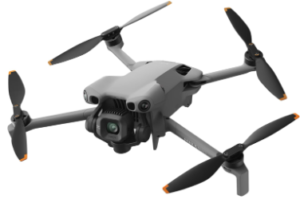
The DJI Mini 5 Pro combines a sub-250g foldable body with a 1-inch 50MP CMOS camera, giving it considerably more imaging capability than its compact size suggests. It records 4K/60fps HDR video and 4K/120fps slow motion. The f/1.8 aperture also gives the camera a wider opening for gathering light in darker scenes. For travelers and content creators who want to keep their setup small, the Mini 5 Pro offers a way to carry a capable camera drone without stepping up to a much larger aircraft.
There is more flexibility in the camera system beyond its core 4K recording modes. The 225° flexible gimbal can rotate through a wide range of angles, and true vertical shooting makes it easier to create portrait-oriented footage. A 48mm Med-Tele mode provides another perspective for framing subjects from the air. DJI also includes image-processing features designed to preserve detail in low-light conditions.
Flight assistance gives the Mini 5 Pro another advantage for dynamic shooting. Nightscape omnidirectional obstacle sensing combines forward-facing LiDAR with vision sensors to help detect obstacles around the aircraft, including in low-light environments.
ActiveTrack 360° can track moving subjects and adjust the drone’s flight path and framing as they move. As a result, the Mini 5 Pro can handle more demanding tracking shots without requiring the pilot to manage every adjustment manually.
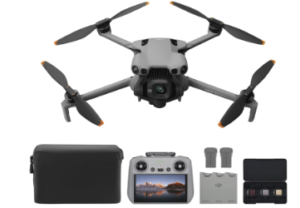
The Fly More Combo adds three batteries, a charging hub, ND filters, spare propellers, and the DJI RC 2 controller. Each Intelligent Flight Battery provides up to 36 minutes of flight time under stated conditions. The controller’s built-in display removes the need to rely on a smartphone while flying, and 42GB of internal storage gives you onboard space before adding a microSD card.
Features
- 1-inch 50MP CMOS camera
- 4K/60fps HDR video
- 4K/120fps slow motion
- 225° flexible gimbal rotation
- True vertical shooting
- Omnidirectional obstacle sensing with forward LiDAR
- ActiveTrack 360°
Pros
- Advanced obstacle sensing
- 360° subject tracking
- Flexible camera movement
- Comprehensive Fly More package
Cons
- Greater wind sensitivity
2) Potensic Atom 2 Fly More Combo with RC PTD 1 Drone
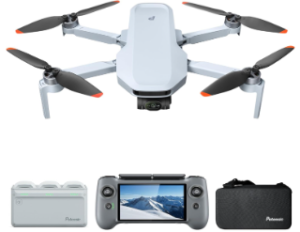
The Potensic ATOM 2 puts a dedicated flight display at the center of its user experience. The RC PTD 1 controller has a 5.5-inch 1080p screen with 700 nits of brightness, so you can operate the drone without attaching a smartphone. It also offers up to 10km of transmission under specified conditions and more than three hours of controller runtime, making the setup convenient when you are away from a power source or planning a longer outing.
Its camera provides the imaging capability to match that convenient setup. A 1/2-inch Sony CMOS sensor produces 48MP stills and 4K/30fps HDR video, while the 3-axis gimbal helps keep footage stable during flight. The F1.8 aperture also gives the camera a relatively wide opening for capturing light. Vertical shooting at up to 2.7K adds another useful option for portrait-oriented content, while ND/CPL filters included with the Fly More Combo provide greater control in bright outdoor conditions.
Its sub-249g design also suits travel where keeping equipment compact matters. The drone folds down for transport, and the included carrying case makes the setup easier to pack without the bulk associated with larger camera drones. The Fly More Combo includes three batteries for up to 96 minutes of combined flight time under stated conditions, along with a charging hub.
The ATOM 2 also gives the pilot several ways to automate subject-focused footage. AI Track includes Spotlight, Follow, and Parallel modes, allowing the drone to maintain attention on a moving subject while reducing the amount of manual camera positioning required. Waypoint flight and Cruise Control provide more options for planned or repeatable movements, while QuickShots and Dolly Zoom add ready-made shooting effects for creators who want more variety.
Features
- Three-axis gimbal
- 1/2-inch Sony CMOS sensor
- 4K/30fps HDR video
- AI Track
- 5.5-inch 1080p/700-nit RC PTD 1 controller
- Under-249g foldable design
- Up to 96 minutes of combined flight time
Pros
- Built-in-screen controller
- Extended combined flight time
- Compact and lightweight
- Automated tracking modes
Cons
- 4K video limited to 30fps
3) DJI Air 3S Fly More Combo (RC 2 Screen Remote Controller) 4K Drone
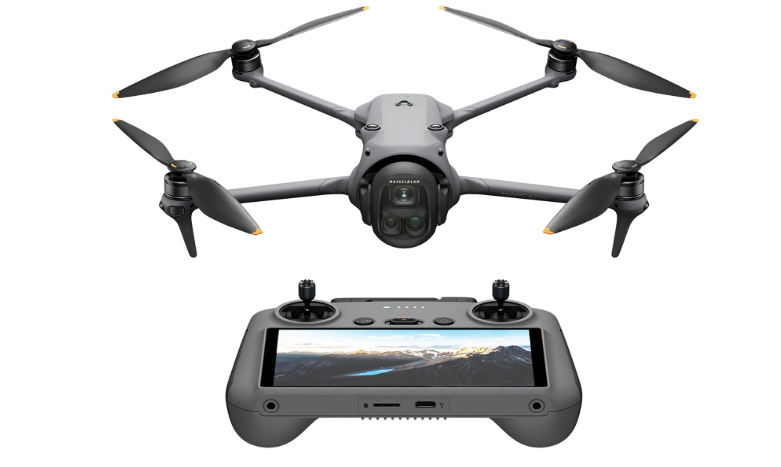
For buyers comparing the best 4K Drones for more demanding aerial photography, the DJI Air 3S takes a camera-focused approach. Its 1-inch 50MP primary camera works alongside a 48MP medium-tele camera with a 70mm equivalent focal length and 3x optical zoom. That second perspective is useful for distant subjects, giving photographers more framing options without relying on digital enlargement.
The primary camera records 4K/60fps HDR video and supports 10-bit D-Log M and HLG. It also captures 4K/120fps slow motion. Meanwhile, the large sensor can help the Air 3S perform in scenes where available light becomes a concern. Up to 14 stops of dynamic range under specified video conditions can also help retain detail across brighter and darker areas of a scene.
Each battery provides up to 45 minutes of flight time under specified conditions, while the Fly More Combo includes three batteries and a charging hub. The DJI RC 2 controller adds a built-in display, so you can operate the drone without relying on a separate smartphone.
Its flight systems complement that more capable camera platform. Omnidirectional obstacle sensing works with forward-facing LiDAR and other sensors to detect obstacles around the aircraft. Smart RTH can plan a return route when conditions allow, while ActiveTrack 360° and Waypoint flight provide more control over aerial movement.
That capability comes with a portability tradeoff. At 724g, the Air 3S is considerably heavier than the sub-250g Mini 5 Pro and ATOM 2, which matters if compact travel gear is a priority. For buyers who value camera versatility and longer shooting sessions over a lighter setup, however, that larger platform brings useful advantages.
Features
- 1-inch 50MP primary camera
- 48MP 70mm-equivalent medium-tele camera
- 3x optical zoom
- 4K/60fps HDR video
- 4K/120fps slow motion
- 10-bit D-Log M and HLG
- Omnidirectional obstacle sensing with forward LiDAR
- Up to 45 minutes of flight time
Pros
- Dual-camera shooting flexibility
- 3x optical telephoto
- Strong low-light capability
- Advanced flight and safety systems
- Long flight endurance
Cons
- Larger and heavier than sub-250g drones
- Higher purchase cost
4) Bwine F7GB2 Pro Drones with Camera for Adults 4K UHD
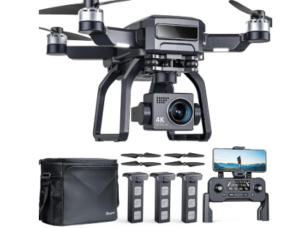
The Bwine F7GB2 Pro offers a straightforward 4K setup for buyers who want stabilized aerial footage without moving to a larger camera drone. Its detachable camera uses a 3-axis gimbal to keep footage steady as the aircraft moves, while the 120° field of view captures a broad perspective. A 5x digital zoom provides another way to frame subjects, although it relies on digital enlargement rather than optical magnification.
Keeping the aircraft oriented and recoverable is another part of the F7GB2 Pro’s design. GPS positioning works alongside a compass, gyroscope, and barometer to support stable flight and Return to Home. The return function can activate after low battery or signal loss, or through manual input. Beginner Mode and an electronic fence provide additional control by helping limit the drone’s operating area.
Capturing moving subjects does not always require constant manual input. Follow Me, Waypoint, and Orbit modes allow the F7GB2 Pro to handle different types of automated movement, giving the pilot more options for tracking subjects or creating repeatable flight paths. These features complement the GPS system rather than simply adding another set of controls, making the drone more useful for planned or subject-focused footage.
Three 2600mAh batteries provide up to 75 minutes of combined flight time under the stated conditions. Each battery contributes roughly 25 minutes, while the drone supports up to 3,000m of control range. Its Level 6 wind-resistance claim also points to an outdoor-oriented design, although actual performance depends on conditions.
Features
- 4K detachable camera
- Three-axis gimbal stabilization
- GPS-assisted flight with Return to Home
- Follow Me, Waypoint and Orbit modes
- Beginner Mode and electronic fence
- Up to 75 minutes of combined flight time
- Up to 3,000m control range
Pros
- Three-battery package
- Stabilized 4K footage
- Multiple automated flight modes
- Beginner-friendly controls
Cons
- Heavier than sub-250g drones
5) Ruko F11 GIM2 Drone with 4K HD Camera
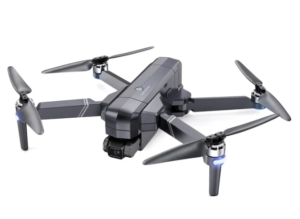
Onto another option in the best 4K Drones, the Ruko F11 GIM2 Drone offers a straightforward 4K setup for aerial footage, combining a 2-axis mechanical gimbal with electronic image stabilization. Its camera records at up to 4K/30fps and covers a 100° field of view, while the adjustable angle can be set from 0° to -80° for different shooting perspectives. A 5x digital zoom provides another framing option when a closer view is needed, although it relies on digital enlargement.
Two batteries provide up to 56 minutes of combined flight time, with each one offering around 28 minutes under the stated conditions. That gives the F11 GIM2 useful endurance without putting the entire outing on a single battery. The controller supports 720p/30 live viewing, and recorded footage can be stored on a microSD card for later use.
GPS and GLONASS positioning give the F11 GIM2 a range of automated flight options for outdoor use. Return to Home can respond to low battery or signal loss, while Follow Me, Point of Interest, and Waypoint modes handle different types of planned or subject-focused movement. There is no obstacle avoidance system, so the pilot remains responsible for monitoring the aircraft’s surroundings throughout the flight.
The 585g aircraft folds for easier transport between shooting locations, although it is still considerably heavier than sub-250g alternatives. Its control range reaches up to 3km in unobstructed conditions, giving the drone useful reach for its class. The F11 GIM2 is less suited to buyers looking for higher-frame-rate video, however, as its recording capability tops out at 4K/30fps.
Features
- 2-axis mechanical gimbal with EIS
- GPS and GLONASS positioning
- 4K/30fps video recording
- 100° field of view
- Adjustable camera angle from 0° to -80°
- Follow Me, Point of Interest and Waypoint modes
- Up to 56 minutes of combined flight time
Pros
- Steadier footage
- Longer shooting sessions
- Predictable outdoor flying
- Flexible camera framing
- Foldable and portable
Cons
- No obstacle avoidance
- 4K video limited to 30fps
6) Parrot PF728000 ANAFI Drone
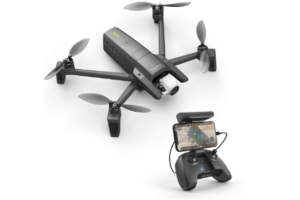
The Parrot ANAFI brings its strongest point to the camera itself. Its 180° tilt lets the lens point above and below the aircraft, creating shooting angles that more restricted cameras cannot provide. The 21MP camera uses a 1/2.4-inch CMOS sensor and records 4K UHD video at up to 30fps. HDR support also helps retain detail when a scene contains brighter and darker areas.
Portability complements that flexible camera design. The 320g carbon-fiber aircraft folds in under three seconds, while its hybrid stabilization combines a 2-axis mechanical gimbal with electronic stabilization. This keeps the camera steady during flight without adding the weight of a larger 3-axis setup.
The ANAFI also offers several creative ways to use its camera movement, making it another candidate for best 4k drones. Hyperlapse, slow motion, SmartDronies, and Dolly Zoom provide different shooting options, while lossless zoom allows closer framing without relying solely on digital enlargement. GPS and GLONASS support positioning during outdoor flights, although the absence of obstacle avoidance means the pilot must remain attentive to the aircraft’s surroundings.
The battery provides up to 25 minutes of flight time, while the Skycontroller 3 offers up to 4km of range under suitable conditions. Its endurance is more modest than some of the larger drones in this roundup.
Features
- 180° camera tilt
- 21MP 1/2.4-inch CMOS camera
- 4K UHD video at up to 30fps
- 2-axis mechanical gimbal with EIS
- GPS and GLONASS positioning
- Up to 25 minutes of flight time
Pros
- Flexible camera angles
- Compact, lightweight foldable design
- Multiple creative shooting modes
- Stabilized footage
- Useful control range
Cons
- 4K video limited to 30fps
- No obstacle avoidance
What to Look for in Best 4K Drones
Camera and Video Quality
When comparing the best 4K Drones, camera quality deserves attention beyond the 4K label itself. Look at the sensor size, frame rates, HDR support, and recording formats, as these can affect how much detail, smoothness, and editing flexibility you get from your footage. A larger sensor can also be useful when shooting in lower light, while higher frame rates give you more options for capturing fast movement or creating slow-motion footage.
Think about the type of footage you actually plan to capture. If you mainly want casual travel videos, 4K/30fps may be enough. More demanding aerial work can benefit from 4K/60fps or higher, along with features such as 10-bit recording and flat color profiles for greater control during editing. Still, paying for advanced video features only makes sense if you will use them.
Stabilization and Camera Movement
A good camera still needs effective stabilization to produce smooth aerial footage. Mechanical gimbals generally provide steadier results by physically countering the drone’s movement, while electronic stabilization can help correct smaller shakes. The number of axes also matters, although a larger gimbal can add weight to the aircraft.
Camera movement can be just as useful as stabilization. A wider range of tilt or rotation gives you more freedom to frame subjects from different angles, while vertical shooting can be helpful for content made specifically for phones and social platforms.
Consider these features based on the type of footage you expect to capture rather than simply choosing the most elaborate camera system.
Flight Time and Battery Setup
Flight time can determine how much usable shooting time you get from each outing. A drone with a longer single-battery runtime may suit extended flights, while a package with multiple batteries can keep you in the air longer without waiting to recharge.
When comparing the best 4K Drones, check whether the advertised flight time applies to one battery or represents the combined runtime of several batteries. Also consider charging options, since a convenient charging hub can make multi-battery setups much easier to manage between flights.
Weight and Portability
Weight affects more than how easy a drone is to carry. A lighter, foldable model can be more convenient for travel, hiking, or spontaneous flights, while a larger aircraft may offer room for more capable cameras and flight systems. If portability matters to you, pay attention to the drone’s weight when ready to fly and its folded dimensions rather than looking at the body size alone. A compact design can also make a difference when the drone needs to share space with other camera gear.
Obstacle Sensing and Flight Assistance
Flying around trees, buildings, or other objects leaves less room for correction when the aircraft is moving quickly. Obstacle sensing can give the drone greater awareness of its surroundings by using sensors to detect objects in its flight path. More advanced systems can cover multiple directions, while some drones offer no obstacle detection at all. Even with these systems, the pilot still needs to monitor the aircraft and its surroundings.
Automated flight modes address a different part of the flying experience. Follow Me can keep the drone focused on a moving subject, while Waypoint and Point of Interest modes can simplify planned movements. Return to Home is also useful when the battery gets low or the connection is lost. The important thing is to consider which functions actually match the way you intend to fly rather than choosing based on the number of modes available.
Controller and Transmission
The controller can have a bigger impact on the flying experience than it might seem at first. A built-in display lets you operate the drone without tying up your smartphone, while a phone-based controller can keep the setup lighter and simpler. Transmission range also matters when you plan to fly farther from your position, but advertised distances are usually measured under ideal conditions. Pay attention to the controller’s screen, battery life, connection stability, and overall setup, not just the stated transmission range.
Storage and Charging
Recording in 4K can fill storage faster than you might expect, especially during longer flights. Look at how the drone stores footage and whether it supports removable storage, since having enough space can save you from stopping to transfer files between flights. The charging setup deserves attention too, particularly if you plan to carry multiple batteries for longer outings.
More storage gives you greater freedom to record, while a charging hub can make managing several batteries much easier. For shorter, occasional flights, though, you may have little reason to prioritize either feature over the camera or flight systems.
Intended Use
A drone that works well for travel may not be the same one you would choose for more demanding aerial photography. If portability is the priority, a lightweight foldable design can make more sense, while longer flights may call for greater battery capacity or multiple batteries. For content creation, camera quality, stabilization, and creative shooting features may deserve more attention than maximum range.
Best 4K Drones FAQs
Is 4K wWorth it on a Drone?
4K can be worthwhile if you want more detailed aerial footage or greater flexibility when cropping and editing. It can also give your videos more room for post-production than 1080p. However, 4K resolution alone does not guarantee better footage, so camera quality, stabilization, and frame rate still matter.
How Much Flight Time Should a 4K Drone Have?
There is no single flight time that suits every user. Around 20 to 30 minutes per battery can be practical for shorter recreational flights, while longer sessions may benefit from greater endurance or multiple batteries. Keep in mind that advertised flight times are usually measured under specific conditions and may be shorter during actual use.
Can a 4K Drone Record Good Video At Night?
It depends heavily on the camera system and available light. A larger sensor, wider aperture, and effective image processing can help a drone capture cleaner footage in darker conditions, while stabilization can help keep the image steady. Even with these advantages, nighttime recording places greater demands on the camera than shooting in good daylight.
Conclusion
The best 4K drones on our list show that a 4K label is only part of what separates one drone from another. Camera capability, stabilization, flight performance, and endurance can all shape what you get from that resolution in actual use. Revisit the options that match the footage you want to create, then choose the one whose capabilities you can actually put to work.
Related: