
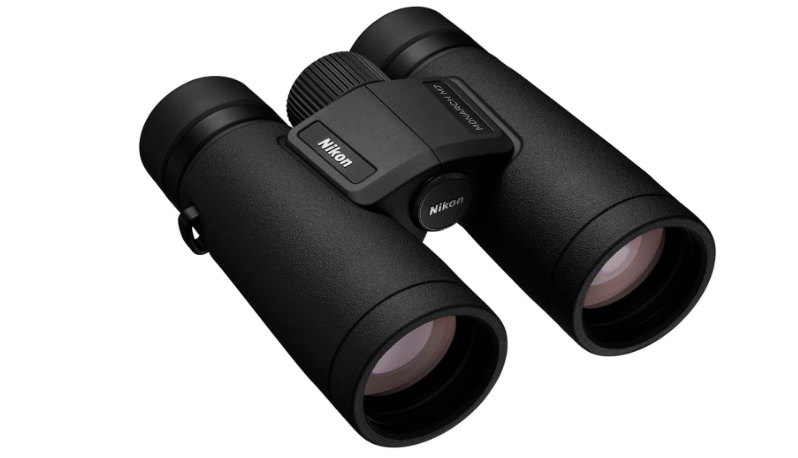
The best binoculars for Alaska cruise can make a big difference when you are watching wildlife and taking in the scenery from the ship. A whale may surface far beyond the deck, an eagle can disappear across the sky in seconds, and rugged details along the shoreline may be difficult to see with the naked eye.
The right binoculars help bring those moments closer without becoming a hassle to carry. Since you may use them for hours while moving around the ship, look for a pair that is comfortable, easy to focus, and steady enough for tracking wildlife. Weather, changing light, and long viewing sessions also make features like waterproofing, eye relief, and optical quality worth considering.
The binoculars in this guide take different approaches to those demands. Some are compact and easy to carry, while others offer larger optics or features suited to more detailed viewing. Comparing those differences can help you find a pair that fits the way you plan to experience Alaska from the water.
Tips for Using Binoculars on an Alaska Cruise
Having binoculars with you is one thing. Knowing how to use them effectively is another. A few simple habits can make it easier to find wildlife, keep a moving subject in view, and get a clearer look when a sighting happens.
Keep Your Binoculars Within Reach
Wildlife sightings can be brief, so it helps to keep your binoculars somewhere you can grab them quickly. A neck strap or binocular harness can keep them accessible while you move around the ship, while a small bag can protect them when you’re not using them. Leaving them in your cabin may mean missing a sighting that lasts only a few seconds.
Scan the Scene Before Looking Through the Binoculars
It can be surprisingly difficult to find a whale or bird if you immediately look through the binoculars. Start by scanning the area with your eyes, identify where the movement is, and then bring the binoculars up to your eyes. This is particularly useful across open water, where there may be few visual reference points to help you locate a moving subject.
Use a Stable Position When Possible
A moving ship can make even moderate magnification feel less steady. Standing with your feet comfortably apart and keeping your elbows close to your body can help reduce unnecessary movement. When appropriate, you can also use a solid part of the ship for support, provided you can do so without leaning over the railing or putting yourself in an unsafe position.
Keep the Lenses Clear
Rain, mist, and moisture can quickly affect the view through your binoculars. Carrying a clean microfiber lens cloth can help remove water droplets or smudges without scratching the glass. Avoid wiping wet lenses with clothing or other rough materials, especially when salt spray or grit may be present.
Give Yourself Time to Adjust the Focus
Before heading out, take a moment to familiarize yourself with the focus wheel and diopter adjustment. Once you’ve set them correctly for your eyes, switching between distant wildlife and nearby scenery becomes easier. That preparation can save valuable time when a sighting suddenly appears.
Best Binoculars for Alaska Cruise
1) Vortex Diamondback HD 8×42 Binoculars
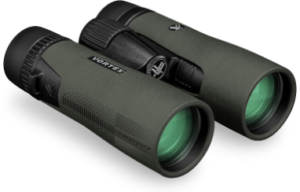
The Vortex Diamondback HD 8×42 is a practical full-size option for scanning the wide scenery you encounter on an Alaska cruise. Its 8x magnification brings distant subjects closer without making the view as sensitive to hand movement as higher magnification can be. Pair that with 42mm objective lenses, and you have a versatile setup for wildlife, glaciers, and general sightseeing.
The 393-foot field of view at 1,000 yards is particularly useful when something moves across the water. Instead of seeing only a narrow section of the scene, you have more space to locate and follow a whale, bird, or other wildlife. That matters when a sighting happens quickly and you need to pick up the subject without constantly repositioning the binoculars.
The optical system adds to that viewing experience, especially when you are scanning changing scenes from a cruise deck. Vortex uses select glass elements, fully multi-coated lenses, and dielectric prism coatings to support resolution, contrast, color fidelity, and light transmission. Additionally, the 42mm objectives provide a 5.25mm exit pupil, giving this configuration useful light-gathering potential when you are watching wildlife near the shoreline or looking across the water as daylight begins to fade.
Viewing comfort is another consideration during long periods on deck. The Diamondback HD provides 17mm of eye relief, adjustable eyecups, and a center focus wheel, so you can set up the view without much fuss. A 5-foot close focus also gives it more flexibility than a binocular designed only for distant subjects.
There is also plenty of protection for outdoor use. The binoculars use rubber armor for grip and external protection, while argon gas purging and O-ring seals provide waterproof and fogproof performance. That is useful when the weather turns wet or temperatures change as you move between the ship’s interior and deck.
Features
- 8x magnification
- 42mm objective lenses
- 393-ft field of view
- 17mm eye relief
- 5-ft close focus
- HD optical system
- Dielectric prism coatings
- Waterproof and fogproof
Pros
- Wide field of view
- Versatile 8×42 configuration
- Comfortable extended viewing
- Secure rubber-armored grip
Cons
- No image stabilization
2) Nikon PROSTAFF P3 8×42 Binoculars
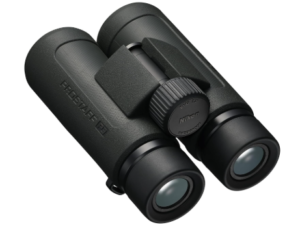
Nikon PROSTAFF P3 8×42 stands out for the amount of space it gives your eyes behind the eyepieces. Its 20.2mm eye relief, paired with turn-and-slide eyecups, lets you adjust the viewing position to suit how you look through the binoculars. This can be particularly useful on an Alaska cruise, where you may spend long stretches looking through the binoculars, especially if you wear glasses.
The viewing experience also benefits from the 42mm objectives and 5.3mm exit pupil. Combined with 8x magnification, the setup provides useful reach without making the view as demanding to hold steady as higher magnification can be. That balance works well when you move between distant wildlife and the larger scenery surrounding the ship.
Nikon uses multilayer lens coatings and a silver-alloy prism coating to support light transmission and image brightness. These details become more relevant when cloud cover reduces the available light or you continue watching as the day begins to fade. The PROSTAFF P3 is therefore designed around maintaining a bright, clear view rather than simply increasing magnification.
Focusing is another part of its practical appeal. The central focus system allows straightforward adjustments when your attention shifts between subjects at different distances. With a 9.8-foot close-focus distance, the binoculars can also handle relatively nearby subjects, although their 8×42 configuration remains better suited to viewing across larger distances.
The construction is prepared for the wet and changing conditions you can encounter around the water. O-ring seals and nitrogen filling provide waterproof and fogproof performance, with Nikon rating the binoculars for submersion to 3.3 feet for up to 10 minutes. Rubber armoring adds grip and protection, while the fiberglass-reinforced polycarbonate body keeps the weight to 20.3 ounces.
Features
- Multilayer lens coatings
- 20.2mm eye relief
- 5.3mm exit pupil
- 8x magnification
- 377-ft field of view
- Silver-alloy prism coating
- 42mm objective lenses
- Waterproof and fogproof
Pros
- Generous eye relief
- Comfortable extended viewing
- Bright 8×42 configuration
- Secure rubber-armored grip
Cons
- Less compact than smaller binoculars
3) Wingspan Optics Fieldview 8×32 Compact Binoculars
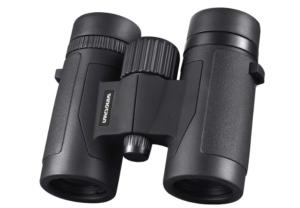
The Wingspan Optics Fieldview 8×32 Compact takes a different approach from the full-size 8×42 binoculars in this lineup. At 15.2 ounces, it is considerably easier to carry around a cruise ship, whether around your neck on deck or tucked into a bag between sightings. You still get 8x magnification, so the smaller design does not mean giving up the same level of reach.
The 32mm objective lenses are where the main trade-off appears. They gather less light than the 42mm objectives used by several binoculars here. In bright daytime conditions, that difference may matter less, while overcast skies and fading daylight give the larger objective lenses an advantage. For daytime cruise sightseeing, however, this can be a practical compromise.
Its 362-foot field of view at 1,000 yards gives you enough surrounding scene to scan for wildlife and then keep a moving subject in view. The 8x magnification also avoids the greater sensitivity to hand movement that comes with moving up to 10x. That makes the Fieldview a straightforward option for general sightseeing when you want a familiar 8x view without moving to higher magnification.
The binoculars also offer some flexibility beyond distant viewing. A 3-meter close-focus distance allows you to bring relatively nearby subjects into focus, while the BaK-4 prisms and multi-layer coated lenses support the clarity of the view. Tripod adaptability adds another option if you want a more stable setup while watching from a fixed position.
The Fieldview is also built for outdoor use. Its waterproof and fogproof construction gives it some protection when the weather turns wet or conditions change during the day. The non-slip grip also helps when handling the binoculars in damp conditions.
If easy carrying matters more than maximum low-light performance, the Fieldview offers a practical alternative to the larger 8×42 models among the best Binoculars for Alaska Cruise.
Features
- 15.2-ounce lightweight design
- 32mm objective lenses
- 362-ft field of view
- BaK-4 prisms
- 8x magnification
- 3m close focus
- 14.8mm eye relief
- Waterproof and fogproof
Pros
- Lightweight, compact design
- Familiar 8x magnification
- Useful close-focus distance
- Tripod adaptable
Cons
- Shorter eye relief than some full-size options
4) Bushnell H20 8x42mm Porro Prism Binoculars
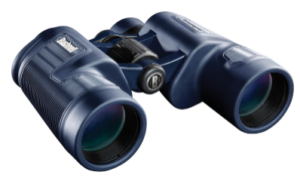
So far, the best Binoculars for Alaska Cruise have shown why full-size 8×42 binoculars remain popular, while the Wingspan Optics Fieldview has shown what you gain by moving to a smaller format. The Bushnell H20 8x42mm takes a different route, keeping the full-size configuration but pairing it with a traditional Porro prism design for a more substantial feel in the hands.
That physical design is more than a visual difference. The textured rubber armor and soft grip give you plenty of surface to hold onto, while the large center-focus knob is easy to reach when you need to adjust your view. Twist-up eyecups also let you set the binoculars to a comfortable viewing position before settling in for a longer look. If you’re moving between scenery and wildlife throughout the day, straightforward handling can be just as useful as another specification on the box.
The H20 also puts considerable emphasis on protection from wet conditions. Its O-ring-sealed, nitrogen-purged construction carries an IPX7 waterproof rating, while the fogproof design helps keep the optics usable when temperatures and weather conditions change. Rain and damp conditions are part of outdoor cruise viewing, so having this level of protection can be useful when you are spending time on deck.
Optically, the 8×42 setup keeps the H20 suited to the same broad range of distant viewing as the other full-size models. The 42mm objectives offer greater light-gathering potential than the smaller 32mm and 25mm formats in this lineup, which can help maintain a brighter view under overcast skies or as daylight begins to fade.
Meanwhile, 8x magnification remains manageable for handheld use. Fully multi-coated optics and BaK-4 prisms support light transmission and image quality when you are scanning the water, shoreline, or surrounding landscape.
Features
- IPX7 waterproof and fogproof construction
- Porro prism optical design
- 42mm objective lenses
- Textured rubber armor
- Fully multi-coated optics
- BaK-4 prisms
- 17mm eye relief
- 18-ft close focus
Pros
- Strong waterproof and fogproof protection
- Secure textured grip
- Tripod adaptable
- Large, easy-to-reach focus knob
Cons
- Bulkier than compact models
- Long close-focus distance
5) Nocs Provisions Standard Issue 10×25 Binoculars
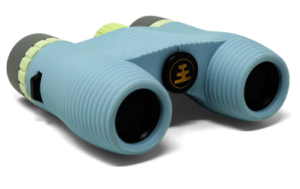
The Nocs Provisions Standard Issue 10×25 is designed to stay within easy reach. Weighing 11.85 ounces, its compact body is easy to carry around a cruise ship. You are less likely to feel as though you need to plan around the binoculars before bringing them along.
Interestingly, Nocs pairs that small footprint with 10x magnification. That gives the Standard Issue more enlargement than the 8x models we’ve covered so far, which can be useful when a distant whale, bird, or shoreline feature catches your attention. The catch is that higher magnification also makes hand movement more noticeable. Finding a subject is one thing; keeping a steady view of it is another, especially when you’re holding the binoculars from a moving deck.
The 25mm objectives are what allow the binoculars to remain so compact, but they also create a clear trade-off. Compared with the 42mm objectives used by several full-size models here, they have less light-gathering potential. In bright daytime conditions, that may be an acceptable exchange for the smaller body. As cloud cover thickens or daylight starts to fade, however, the larger objectives have an advantage, particularly when you’re watching wildlife along a shaded shoreline or scanning the water later in the day.
Another detail worth considering when scanning for wildlife is the Standard Issue which provides a 315-foot field of view at 1,000 yards, giving you less surrounding space than several of the larger binoculars in this lineup. That narrower view can make it harder to pick up a moving whale or bird across a broad stretch of water, but once you locate it, the 10x magnification gives you extra reach.
The Nocs does not treat its small size as a reason to skip outdoor protection. Its IPX7 waterproof construction, nitrogen-filled body, and O-ring sealing provide protection against water and fog, while the wave-textured grip and impact-resistant housing make frequent handling easier.
For a binocular designed to stay close at hand, that combination is useful when you’re moving between the indoor observation areas and open deck, where rain, mist, and changing temperatures can quickly become part of the viewing experience.
Features
- 11.85-ounce weight
- 10x magnification
- 25mm objective lenses
- 315 ft field of view
- IPX7 waterproof construction
- Wave-textured grip
- BaK-4 prisms
- Fully multi-coated optics
Pros
- Very compact and lightweight
- Higher 10x magnification
- Easy to keep within reach
- Rugged, grippy exterior
Cons
- Narrower field of view than several full-size options
6) Vortex Viper HD Roof Prism 8x42mm Binoculars
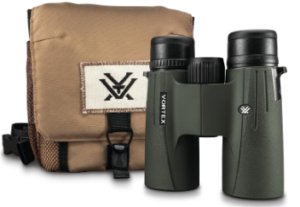
The Vortex Viper HD 8×42 provides a 409-foot field of view at 1,000 yards, giving you plenty of surrounding area to work with when scanning for a whale, tracking a bird in flight, or trying to relocate an animal after it briefly disappears from view.
Optical system takes things a step further. Vortex uses select glass elements to improve resolution, color fidelity, edge-to-edge sharpness, and light transmission, while XR Plus lens coatings and dielectric prism coatings are designed to support brightness and clarity. On an Alaska cruise, that matters when you’re looking across distant mountains, textured shorelines, or wildlife where fine detail helps separate the subject from its surroundings.
There is also a practical reason to consider the Viper HD when comparing the best Binoculars for Alaska Cruise. Its 8×42 configuration keeps the magnification manageable for handheld viewing while giving the objectives enough size for useful light-gathering potential. What’s more, the 18mm eye relief and adjustable eyecups add flexibility for different viewing positions, including use with glasses.
The Viper HD is not simply built around optical performance. Its true open-hinge design helps reduce bulk while providing an ergonomic grip, and the rubber armor gives you a secure hold when handling the binoculars on deck. The center focus wheel and locking diopter also make it straightforward to adjust the view when moving between subjects at different distances.
Its 24.5-ounce weight does mean this is still a substantial full-size binocular. The included GlassPak harness helps with carrying it around the ship, but readers prioritizing the smallest possible setup will find lighter options elsewhere in the lineup.
Weather protection rounds out the design. Argon purging and O-ring sealing give the Viper HD waterproof and fogproof construction, while the exterior lenses receive ArmorTek protection against scratches, oil, and dirt. Those details become useful when you’re moving between sheltered parts of the ship and an exposed deck where rain, mist, and changing temperatures can affect both handling and visibility.
Features
- 409 ft field of view
- 8x magnification
- HD optical system
- XR Plus lens coatings
- 42mm objective lenses
- 18mm eye relief
- 6-ft close focus
- Argon-purged waterproof and fogproof construction
Pros
- Very wide field of view
- Strong optical resolution and color fidelity
- Ergonomic open-hinge design
- Comfortable eye relief
Cons
- Heavier than several compact options
- Premium-priced
7) Zeiss Terra ED 8×42 Binoculars
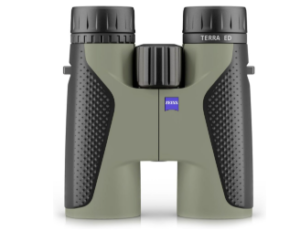
Changing light can alter how much detail you can pick out from a distant shoreline or a whale surfacing against the water. The Zeiss Terra ED 8×42 is designed with those viewing conditions in mind, using ED glass and a high light-transmission optical system to produce a clear, detailed image. That makes it particularly interesting for cruise viewing, where the distance between you and the subject can change constantly.
For the best Binoculars for Alaska Cruise, that balance between optical performance and portability can be important. The Terra ED makes a case for keeping a full-size binocular close when image detail matters more than saving a few ounces of bag space. Its 42mm objectives provide useful light-gathering potential. The 8x magnification also keeps the view manageable for handheld use from the ship.
That 8x configuration works well when the subject is moving. A 375-foot field of view at 1,000 yards gives you enough surrounding area to scan the water and pick up wildlife before following it as it moves. You can then shift naturally from a distant whale to a mountain slope or shoreline without switching to a different magnification.
The viewing experience is supported by 18mm of eye relief and a 5.3mm exit pupil. Those specifications contribute to a comfortable view during longer observation periods. The large center focusing wheel also makes it easier to adjust when your attention moves between subjects at different distances. For cruise viewing, where a quick sighting can turn into several minutes of watching, that ease of use matters.
The Terra ED also has the protection expected from an outdoor binocular. Its waterproof, nitrogen-filled construction helps guard against water and fog, while the fiberglass-reinforced housing and rubber armoring provide a secure exterior when you’re carrying and handling it around the ship. That is useful when moving between sheltered viewing areas and an exposed deck where rain and mist can appear without much warning.
Features
- ED glass
- High light-transmission optical system
- 375 ft field of view
- 8x magnification
- 42mm objective lenses
- 18mm eye relief
- 5.3mm exit pupil
- Waterproof and nitrogen-filled construction
Pros
- Detailed optical performance
- Strong light-gathering potential
- Comfortable eye relief
- Durable full-size construction
Cons
- Bulkier than compact alternatives
What Makes the Best Binoculars for Alaska Cruise?
Several factors can affect how well binoculars perform during an Alaska cruise. The best Binoculars for Alaska Cruise viewing need to balance magnification, size, stability, and optical quality with the practical realities of spending time on a moving ship. The following factors are worth considering before choosing a pair.
Magnification
Magnification determines how much larger a distant subject appears through the binoculars. Objective size affects how much light the optics can gather. Together, these specifications influence both the viewing experience and the physical design of the binoculars.
For most handheld cruise viewing, 8x offers a useful balance. It provides enough magnification to bring distant wildlife and scenery closer without making the view as sensitive to hand movement as higher magnification can be. A 10x model provides more reach when a whale or bird is farther offshore, but the narrower view can be more difficult to hold steady.
Objective Size
Objective size creates another distinction. A 42mm binocular generally has greater light-gathering potential than a 32mm or 25mm model. This can be useful under overcast skies or as daylight fades. Smaller objectives, however, allow for a more compact design. The choice therefore involves balancing viewing performance with portability.
Stability
Binoculars that feel steady on land can behave differently once you’re standing on a moving cruise ship. Small movements from the ship or your hands can make a distant subject harder to keep centered, particularly with higher magnification.
This matters when you’re following wildlife rather than simply looking at a stationary landscape. A whale moving across the water or a bird passing through your view can be difficult to track if the image feels too jumpy. A comfortable grip, manageable weight, and moderate magnification can all help you maintain a usable view for longer.
If you prefer 10x binoculars, consider how confidently you can hold them steady before prioritizing the additional reach. The extra enlargement can be useful, but it does not automatically produce a better viewing experience if keeping the subject in sight becomes difficult.
Field of View
A whale does not wait for you to find it, and a bird crossing the water can disappear from view within seconds. This is where field of view becomes particularly useful. Measured as the width of the scene visible at a set distance, field of view tells you how much surrounding area you can see through the binoculars.
A wider view can make it easier to scan open water, locate movement, and follow a subject once you’ve found it. For an Alaska cruise, this can be more useful than simply choosing the binocular with the highest magnification. Extra enlargement helps once you’ve found the subject, while enough surrounding area can make the initial search and tracking much easier.
Optical Quality
Alaska cruise viewing does not always happen under bright, clear skies. Cloud cover, mist, shaded shorelines, and changing daylight can all affect how clearly you see distant subjects.
Glass quality, lens coatings, prism coatings, and overall optical design can influence resolution, contrast, color accuracy, and light transmission. ED glass and quality coatings can also help produce a clearer, more detailed view, particularly when you’re trying to distinguish wildlife from its surroundings or pick out details on a distant landscape.
These differences can become more noticeable when you’re looking across hazy water, under cloud cover, or toward a shaded shoreline. For this type of viewing, optical quality is less about having the longest list of premium specifications and more about how clearly the binoculars reveal distant subjects in less-than-ideal conditions.
Size, Weight, and Accessibility
A pair of binoculars is only useful when you have it within reach when something interesting appears. On a cruise, that means considering how easily you can carry it around the ship and keep it ready for an unexpected sighting. Smaller models can slip into a day bag or remain around your neck without adding as much bulk. Larger binoculars may offer a more substantial viewing experience, but their additional size and weight can become noticeable when you’re walking around the ship for hours.
This is less about choosing the lightest binocular available and more about finding a size you will actually be comfortable carrying. If a pair is constantly left in your cabin because it feels inconvenient to bring along, its optical advantages do not help when a whale suddenly surfaces offshore.
Construction Quality
An exposed cruise deck can introduce rain, mist, humidity, and sudden temperature changes. Waterproof and fogproof construction therefore becomes more than a nice extra for binoculars intended for an Alaska cruise. O-ring sealing helps prevent water from entering the housing, while nitrogen or argon purging can help reduce internal fogging when conditions change. These features can help keep the optics usable when the weather becomes damp or when you move between different environments on the ship.
It is still worth checking the specific waterproof rating rather than assuming every waterproof binocular offers the same level of protection. Waterproof construction also does not mean a pair is designed for prolonged exposure to saltwater or submersion.
Eye Relief and Focusing Comfort
Cruise wildlife viewing can last much longer than the few seconds it takes to spot an interesting subject. You might remain at the rail watching a whale move through the water or spend several minutes following birds along the shoreline. Comfort therefore matters alongside optical performance.
Eye relief is particularly relevant for people who wear glasses because it affects how far your eyes can sit from the eyepieces while still seeing the full field of view. Adjustable eyecups can also help you find a comfortable viewing position.
Focusing deserves attention too. A smooth, accessible focus wheel makes it easier to shift between subjects at different distances. This is useful when your attention moves from nearby scenery to wildlife farther offshore. A shorter close-focus distance can add versatility, although it is less important if your main goal is distant wildlife and landscape viewing.
Best Binoculars for Alaska Cruise FAQs
Are Binoculars Worth Bringing on an Alaska Cruise?
Yes, especially if you want a closer look at wildlife, birds, glaciers, and distant shoreline features. Many sights can appear small from a cruise ship. Binoculars make it easier to pick out details that may be difficult to see with the naked eye. Keeping them within easy reach also means you are ready when an unexpected sighting appears.
What Binoculars Are Best for Whale Watching in Alaska?
For whale watching in Alaska, binoculars with moderate magnification, a wide field of view, and clear optics can make it easier to find and follow whales as they surface. An 8x configuration is often a practical choice. It provides useful reach without being as difficult to hold steady as higher magnification.
Conclusion
Having read through this entire article, you now have a clearer idea of what to consider when choosing binoculars for your next Alaska trip. Magnification, stability, optical clarity, size, and comfort can all affect how useful a pair is once you are on board.
Remember, the best Binoculars for Alaska Cruise are the ones that balance the features you value with the way you expect to use them. Look back through the options, compare the differences that matter most to you, and choose a pair you will be comfortable carrying and ready to use when something catches your eye.
Ready for your Alaska adventure? Choose your binoculars and start getting prepared for the views ahead.
More: