
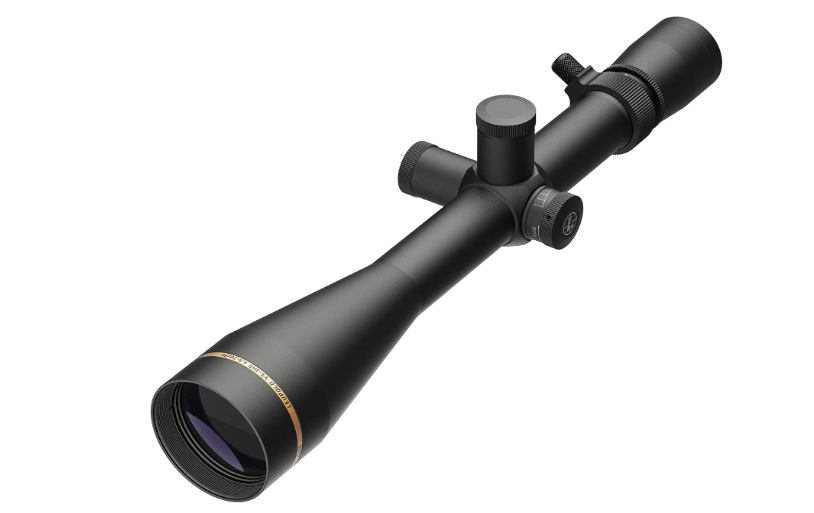
Looking for the best ELR Scope? We’ve compared seven premium riflescopes and highlighted the features that matter most for extreme long-range shooting, making it easier to understand how each model performs in demanding conditions.
Extreme long-range shooting requires far more than high magnification alone. Optical clarity, precise turret tracking, reticle design, elevation travel, and overall durability all contribute to accurate shot placement when every adjustment counts.
Alongside the product reviews, you’ll also find a practical buying guide and answers to frequently asked questions that explain the features influencing long-range performance. Together, they provide the knowledge needed to compare each scope with greater confidence and identify the one that best fits your shooting needs.
Best ELR Scope
Let’s take a closer look at the top ELR scopes that stand out for their optical quality, precision adjustments, and long-range performance.
1) Leupold Mark 5HD 7-35x56mm ELR Riflescope
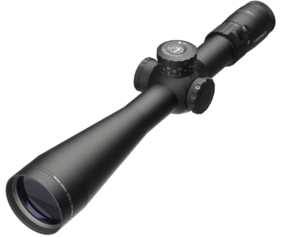
The Leupold Mark 5HD 7-35x56mm Riflescope is designed for shooters who demand the precision needed for extreme long range shooting, making it a compelling option for anyone searching for the best ELR Scope. Its 7-35x magnification range provides the power needed to identify distant targets with confidence.
Meanwhile, the 56 mm objective lens gathers more light to produce a bright and detailed sight picture. The Twilight Max HD Light Management System further improves image quality by reducing glare, sharpening edge-to-edge clarity, and extending usable shooting time in fading light.
The scope is built around a durable 35 mm maintube that provides the strength needed for demanding conditions. In addition, advanced sealing methods keep moisture out while protecting the internal optics during temperature changes, elevation shifts, and heavy recoil.
It is also waterproof, fogproof, and shockproof, giving shooters dependable performance across a wide range of environments. Despite offering higher magnification, the Mark 5HD adds only a small amount of weight compared to its 5-25x56mm counterpart.
Precision adjustments come from the M5C3 turret system, which uses low profile dials with 1/10 MIL click adjustments. The system offers up to 30 MILs of elevation travel across three revolutions. Furthermore, visual and tactile revolution indicators help shooters track turret position during large adjustments.
The Front Focal Plane PR2-MIL reticle enlarges with the image, allowing accurate ranging and holdovers at every magnification setting. Eye relief and field of view also support comfortable target acquisition during extended shooting sessions.
Pros
- Wide 7-35x magnification range
- Twilight Max HD Light Management System
- Front Focal Plane PR2-MIL reticle
- M5C3 1/10 MIL turrets
- 30 MIL elevation adjustment
- Visual and tactile revolution indicators
- Waterproof, fogproof, and shockproof
- Durable 35 mm maintube
Cons
- Larger size than compact scopes
- 30 oz weight may not suit lightweight rifle setups
2) Athlon Cronus BTR Gen2 UHD Gun Scope
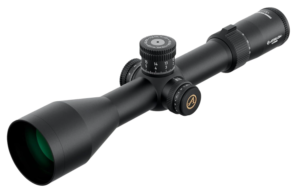
The Athlon Cronus BTR Gen2 UHD Gun Scope is built for precision shooters who rely on clear optics and repeatable adjustments when every shot counts. Its 4.5-29x magnification range offers the flexibility to engage targets at varying distances.
Meanwhile, the 56 mm objective lens gathers more light to produce a bright sight picture. UHD extra-low dispersion glass minimizes chromatic aberration for sharp, detailed images. Fully multi-coated lenses further improve light transmission while maintaining accurate color and consistent brightness. An illuminated first focal plane reticle also enhances visibility in changing light conditions and remains proportional at every magnification level.
A one-piece 34 mm main tube made from aircraft-grade aluminum provides the strength needed for demanding environments. In addition, the exterior lenses are protected by XPL coating that helps resist dirt, oil, and scratches. Argon purging improves waterproofing and thermal stability during changing weather conditions. The shockproof and fog-proof construction further supports dependable performance in the field.
The Cronus BTR Gen2 features exposed turrets with internal stainless steel components that produce crisp, tactile click adjustments. A precision zero stop system creates a positive return point after elevation corrections, making adjustments faster and more consistent.
Furthermore, the etched APRS1 first focal plane illuminated MIL reticle supports accurate ranging and holdovers at every magnification. The scope also provides 32 MILs of elevation adjustment, while the side focus parallax system allows precise image adjustment from 25 yards to infinity.
These features combine to create a riflescope that suits shooters who regularly dial for distance instead of relying only on holdovers. Its premium optics, refined adjustment system, and rugged construction make it a dependable choice for precision rifle applications where consistency matters.
Pros
- UHD extra-low dispersion glass
- Fully multi-coated lenses
- Illuminated first focal plane reticle
- Stainless steel turret components
- Precision zero stop system
- 32 MIL elevation adjustment
- XPL protective lens coating
- Waterproof, fog-proof, and shockproof
Cons
- Heavier than many comparable scopes
3) Bushnell Elite Tactical 6-36x56mm XRS3 ELR Riflescope
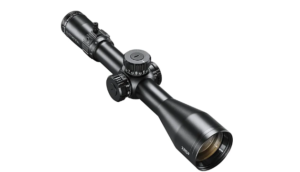
For shooters who rely on precise dialing and advanced reticle features, the Bushnell Elite Tactical XRS3 6-36x56mm Riflescope is built to support confident long-range engagements. Its 6-36x magnification range provides the flexibility to observe and engage targets across varying distances.
The ED Prime optical system works alongside fully multi-coated glass, EXO Barrier Protection, and a specialized reticle element coating to improve light transmission while reducing chromatic aberration. As a result, the scope delivers a bright, detailed image that helps distinguish fine target details.
The XRS3 is constructed around a billet-machined 34 mm aluminum tube that provides excellent structural strength for demanding use. In addition, its IP67-rated design protects against water and dust, while argon purging helps prevent internal fogging during changing weather conditions.
The included threaded sunshade also accepts compatible third-party accessories, giving shooters additional flexibility when configuring their optics. These features make it a capable option for anyone evaluating the best ELR Scope for competition or precision field use.
At the center of the aiming system is the first focal plane G5 illuminated MRAD reticle, which is designed to simplify accurate holds and target corrections. The updated layout includes finer 0.25 MRAD intervals, additional windage references, clearer numerical markings, and improved mover target indicators.
Push-button illumination allows quick brightness adjustments, while a six-hour auto-off function helps conserve battery life. Meanwhile, the exposed 0.1 MRAD turrets provide positive tactile clicks with repeatable tracking. Bushnell’s RevLimiter Zero Stop also allows fast and consistent returns to the established zero after elevation adjustments.
Together, these features create a riflescope that suits shooters who frequently dial for distance and demand consistent performance from their optics. Its advanced reticle design, dependable tracking, and durable construction make it well suited for precision rifle competitions and extended-range target shooting.
Pros
- ED Prime optical system
- Fully multi-coated lenses
- EXO Barrier Protection
- First focal plane G5 illuminated reticle
- RevLimiter Zero Stop
- Repeatable 0.1 MRAD turrets
- IP67 water and dust protection
Cons
- CR2032 battery required for reticle illumination
4) Schmidt & Bender 5-45×56 PM II High Power Riflescope
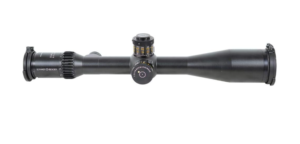
Shooters who need exceptional magnification for distant targets will appreciate what the Schmidt & Bender PM II High Power Riflescope offers. Its 5-45x magnification range provides the flexibility to observe and engage targets across a wide range of distances.
The 56 mm objective lens gathers light to produce a clear sight picture, while the crosshair reticle provides a straightforward aiming reference for precision shooting. Together, these features support accurate target identification when greater magnification is required.
The riflescope is built from durable aluminum and glass to withstand demanding outdoor conditions. In addition, its waterproof construction helps maintain reliable performance in wet or humid environments. A Weaver mount allows quick and secure installation on compatible rails, making it easy to attach the scope and maintain a stable setup.
Comfort also plays an important role during extended shooting sessions. The scope provides 3 inches of eye relief, helping shooters maintain a comfortable viewing position behind the optic. Meanwhile, the wide magnification range allows users to adapt to different shooting distances without changing equipment. This flexibility makes the scope suitable for applications that require both broad target observation and detailed aiming.
The combination of high magnification, durable construction, and practical mounting features supports consistent performance in demanding long-range environments. These qualities make the Schmidt & Bender PM II High Power a worthy option for shooters comparing the best ELR Scope, especially when maximum magnification is a key consideration.
Pros
- Wide 5-45x magnification range
- 56 mm objective lens
- Durable aluminum and glass construction
- Waterproof design
- Weaver mount compatibility
- 3-inch eye relief
Cons
- Basic crosshair reticle
5) Nightforce ATACR 7-35x56mm Riflescope
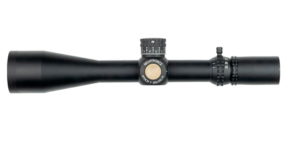
The Nightforce ATACR 7-35x56mm Riflescope helps shooters take advantage of their long-range capabilities. Its 7-35x magnification range provides the flexibility to engage targets across different distances. The ED glass package improves image clarity by reducing optical imperfections, while the wide field of view helps shooters locate and identify targets throughout the zoom range. Together, these features support confident target acquisition in demanding shooting environments.
The scope also uses a first focal plane design that keeps the reticle proportional to the target at every magnification level. In addition, parallax adjustment from 11 yards to infinity helps maintain a clear image across varying distances.
With up to 100 MOA of elevation travel, the scope provides the adjustment range required for modern long-range rifles and cartridges. Its 34 mm body tube supports the internal adjustment system while providing a durable platform for precision use.
Precision adjustments are enhanced by the ZeroStop system, which allows shooters to return quickly and consistently to their established zero after making elevation corrections. The Digillum reticle illumination improves visibility in changing light conditions, while the included Power Throw Lever allows faster magnification changes.
Meanwhile, the MIL-C first focal plane reticle features a fine center aiming point, 0.2 Mil-Radian hold marks, and numbered Mil-Radian references for quicker target engagement and more precise holdovers.
Pros
- ED glass package
- First focal plane reticle
- ZeroStop system
- Digillum reticle illumination
- 100 MOA elevation travel
- Wide field of view
- Power Throw Lever included
Cons
- Heavier 39.3 oz design
6) Steiner Optics 8719-MSR2 M7Xi 4-28x56mm Riflescope
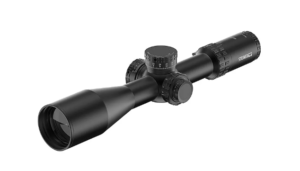
The best ELR Scope contenders often balance precision with versatility, and the Steiner M7Xi 4-28x56mm Riflescope is designed with both in mind. Its 4-28x magnification range provides the flexibility to engage targets across a variety of distances.
The 56 mm objective lens and 94% light transmission help produce a bright, clear image in different lighting conditions. Meanwhile, the 7x zoom system and generous field of view make it easier to observe the surrounding area while maintaining target awareness.
A one-piece 34 mm tube made from aircraft-grade aluminum provides the strength needed for demanding environments. In addition, the scope is waterproof to 66 feet, shockproof, and fogproof for dependable operation in challenging conditions.
It also performs across a wide operating temperature range from -40°F to 160°F. Its compact overall length creates additional rail space, allowing compatible thermal imaging or night vision devices to be mounted when needed.
The first focal plane MSR2 reticle remains proportional throughout the magnification range, helping shooters use the reticle consistently at any power setting. Low-profile turrets provide tactile click-by-click adjustments and include a second rotation indicator for improved adjustment awareness.
Furthermore, the resettable zero system and fully sealed adjustment knobs support reliable operation during repeated corrections. Adjustable parallax, LED illumination with 11 brightness settings, and 0.1 Mil Rad click adjustments further enhance precision during long-range shooting.
These features create a riflescope that adapts well to changing shooting conditions and equipment requirements. Its durable construction, flexible optical system, and dependable adjustment controls make the Steiner M7Xi a practical choice for demanding long-range applications where reliability and versatility are equally important.
Pros
- Great light transmission
- One-piece 34 mm tube
- Low-profile turrets
- Resettable zero
- Waterproof, fogproof, and shockproof
- Short overall length for accessory compatibility
Cons
- CR2032 battery required for illumination
7) Zeiss LRP S5 5-25x56mm ELR Riflescope
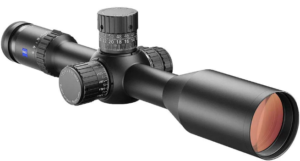
The Zeiss LRP S5 5-25x56mm Riflescope is built for precision shooters who need extensive adjustment range without adding unnecessary weight to their rifle setup. Its 5-25x magnification range supports accurate target engagement across varying distances, while the 56 mm objective lens helps deliver a bright and detailed sight picture.
The first focal plane reticle remains proportional throughout the zoom range, allowing consistent holdovers and ranging at any magnification. A wide field of view also helps shooters locate and follow targets more efficiently.
Built around a durable 34 mm main tube made from aircraft-grade aluminum, the LRP S5 combines strength with a relatively lightweight 21.3-ounce design. In addition, adjustable parallax from 50 yards to infinity helps maintain a sharp image at different shooting distances. The matte finish further complements the scope’s practical design for competition and precision rifle use.
A standout feature of the LRP S5 is its best-in-class total elevation travel, which provides the adjustment range needed for engaging distant targets. Highly repeatable, tactile turrets deliver consistent click adjustments that inspire confidence during repeated corrections. Meanwhile, the daylight-visible illuminated reticle remains easy to see in bright conditions, and the fiber optic illumination system supports clear reticle visibility when lighting changes.
The combination of generous elevation travel, dependable adjustments, and manageable weight makes the LRP S5 well suited for precision rifle competitions. It also performs effectively for target shooting, ammunition testing, load development, and long-range hunting, giving shooters a versatile optic that adapts to a wide range of precision applications.
Pros
- First focal plane reticle
- Best-in-class elevation travel
- Highly repeatable tactile turrets
- Daylight-visible illuminated reticle
- Fiber optic illumination
- Aircraft-grade aluminum construction
- Lightweight 21.3 oz design
Cons
- Maximum magnification is lower than some ELR-focused scopes
How to Choose the Best ELR Scope
Extreme long range shooting places unique demands on both the shooter and the optic. Small differences in image clarity, adjustment accuracy, and reticle design become much more noticeable as the distance increases. Understanding what each feature does and how it influences performance will help you compare different models with greater confidence instead of relying on magnification numbers alone.
Optical Quality
Optical quality determines how clearly you can identify targets and observe fine details at long distances. It is influenced by factors such as glass quality, lens coatings, and light transmission, all of which work together to produce a sharp, bright image. High quality optics also reduce issues like glare and chromatic aberration, making it easier to distinguish small targets and maintain visual clarity in varying light conditions.
Reticle Design
The reticle is the aiming reference inside the scope, and its design plays a major role in long range accuracy. First focal plane reticles remain proportional throughout the magnification range, allowing holdovers and ranging marks to stay accurate at every power setting. Choosing a reticle that matches your preferred shooting method can make target corrections faster and more consistent, which is an important consideration when comparing the best ELR Scope for your shooting needs.
Turret System and Tracking
Turrets control the windage and elevation adjustments that move the point of impact to match changing shooting conditions. A well-designed turret system should provide crisp, repeatable clicks that return to the same position every time. Features such as zero stop systems and clearly marked rotation indicators also help shooters make large adjustments without losing track of their original zero.
Elevation Adjustment Range
Elevation adjustment range refers to the amount of vertical correction available within the scope. Extreme long range shooting often requires substantial elevation changes to compensate for bullet drop over long distances. A scope with generous elevation travel allows shooters to engage distant targets while maintaining sufficient adjustment for different rifles, loads, and shooting environments.
Magnification Range
Magnification determines how large the target appears through the scope. Higher magnification can make distant targets easier to inspect and engage, but it also narrows the field of view and may exaggerate heat mirage under certain conditions. A balanced magnification range provides enough detail for precise aiming while still allowing the shooter to locate and track targets efficiently.
Objective Lens Size
The objective lens is the large front lens that gathers incoming light before it reaches your eye. Larger objective lenses generally collect more light, producing a brighter image that can improve visibility in low light conditions. They also contribute to image resolution, although they often increase the overall size and weight of the scope.
Parallax Adjustment
Parallax adjustment allows the shooter to align the reticle and target on the same optical plane, reducing aiming errors that occur when the eye moves behind the scope. This feature becomes increasingly important at extended distances, where even small alignment errors can affect shot placement. Adjustable parallax also helps maintain a sharper target image across different shooting ranges.
Build Quality
An ELR scope should continue performing reliably in changing weather and demanding environments. Features such as waterproof, fogproof, and shockproof construction help protect the internal optics from moisture, recoil, and temperature changes. Durable tube materials and protective lens coatings also contribute to long-term reliability during regular field or competition use.
Weight
The size and weight of a riflescope influence how the rifle handles during transport and shooting. Larger scopes often provide more adjustment range and bigger objective lenses, but they can also make a rifle heavier. Considering where and how the rifle will be used helps determine whether a lighter or more feature-rich optic is the better choice.
Intended Shooting Application
Not every extreme long range shooter has the same requirements. Some shooters prioritize rapid adjustments and advanced reticles for precision rifle competitions, while others focus on optical clarity for long-range hunting or target practice. Matching the scope’s features to your primary shooting application is often more valuable than choosing the model with the longest feature list alone, especially when selecting the best ELR Scope for competition, hunting, or recreational long-range shooting.
Best ELR Scope FAQs
What is the Best ELR Scope?
There is no single riflescope that is the right choice for every shooter. The best option depends on factors such as your typical shooting distances, preferred reticle, adjustment system, and intended application. Some shooters value maximum magnification for observing distant targets, while others prioritize optical clarity, repeatable turret tracking, or a lighter design. Comparing these features against your specific needs will help you choose a scope that delivers consistent performance at extreme long range.
What Magnification is Best for ELR Shooting?
There ideal magnification depends on the scenario. Higher magnification can make distant targets appear larger, but it also reduces the field of view and may make heat mirage more noticeable. Many precision shooters prefer a scope that offers enough magnification for accurate shot placement while still providing the flexibility to locate and track targets comfortably.
Is a First Focal Plane Reticle Better for ELR Shooting?
A first focal plane reticle is often preferred because its holdover and ranging marks remain accurate throughout the entire magnification range. This allows shooters to use the reticle consistently without changing their aiming references as they zoom in or out. It is especially useful for those who regularly combine turret adjustments with reticle holdovers.
Can an ELR Scope Be Used for Hunting?
Yes. Many ELR scopes are suitable for long-range hunting, provided their size, weight, and features match the intended use. Hunters often benefit from clear optics, reliable adjustments, and durable construction, but they should also consider how carrying a larger scope may affect the overall balance and handling of the rifle in the field.
What Features Should I Prioritize When Choosing an ELR Scope?
Start by focusing on optical quality, reticle design, turret reliability, and available elevation adjustment, as these features have the greatest impact on long-range accuracy. Magnification, objective lens size, durability, and overall weight should also be considered based on your intended application. Evaluating these features together will help you identify the best ELR Scope for your specific shooting needs.
Conclusion
Extreme long-range shooting demands an optic that performs consistently when precision matters most. Optical quality, reliable turret tracking, reticle design, elevation adjustment, and overall durability all play an important role in long-range performance. Understanding how these features work together makes it easier to compare different riflescopes with confidence.
The right ELR scope should match your shooting style, intended application, and performance expectations. High magnification alone is not enough to guarantee consistent results at extended distances. Focusing on the features that matter most will help you evaluate each option with greater confidence and choose an optic that supports accurate shooting whenever the distance begins to stretch.
Explore more on, our site