
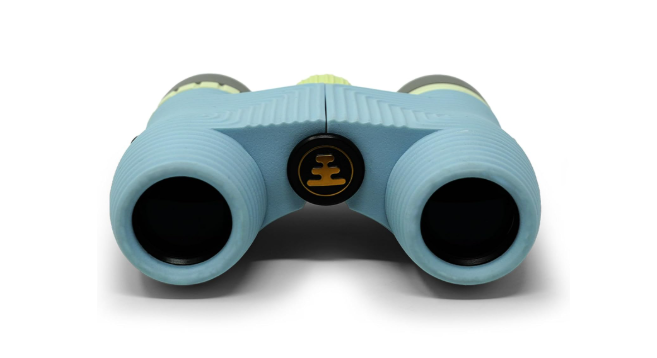
The best compact cruise ship binoculars give you useful magnification without taking up the space or adding the weight of a full-sized pair. They are easier to keep within reach as you move around the ship or head ashore. Finding the right pair means balancing portability with clear views, comfortable handling, and changing conditions at sea.
Packing the right gear can turn a cruise into a collection of moments you remember long after you’ve returned home. A whale surfacing beyond the rail, seabirds skimming across the water, or a distant coastline appearing on the horizon can become part of the story you tell about the trip. Binoculars may seem like a small addition to your luggage, but they can make those fleeting sights much easier to see and appreciate.
This guide explores six compact binoculars for cruise sightseeing. We look at their optical performance, handling, weather protection, portability, and practical limitations to help you find a pair that fits the way you plan to experience the journey.
What Makes a Binocular Compact?
Ever wondered why some binoculars can deliver useful magnification while taking up surprisingly little space?
Much of the answer lies in the size and arrangement of their optical components. Compact models commonly use smaller objective lenses, often around 20mm to 32mm, which help reduce the overall size and weight. That smaller footprint makes them easier to slip into a day bag rather than carry as a separate piece of gear.
There is, however, a trade-off behind those smaller objectives. A 25mm objective has less light-gathering area than a 42mm objective, so compact binoculars generally have less potential for bright viewing in dim conditions. The difference can become more noticeable when you’re watching the horizon early in the morning, under heavy cloud, or as daylight begins to fade.
The shape of the binocular matters too. Roof prisms allow the optical path to fit into a slimmer, more streamlined body, while Porro-prism designs can create a wider shape even when the binoculars remain relatively small. Some compact models go a step further with folding mechanisms that let the body collapse for easier packing.
So, compactness is really an exercise in balance. Shrinking the binoculars saves space and weight, but the design still needs to provide useful magnification, comfortable viewing, and enough optical performance for the conditions in which you plan to use them. A compact binocular, then, isn’t simply a full-sized model made smaller; its design involves deciding where portability matters most and what compromises are acceptable in return.
Best Compact Cruise Ship Binoculars
Let’s dive right in.
1) Nikon Travelite 8×25 Binoculars
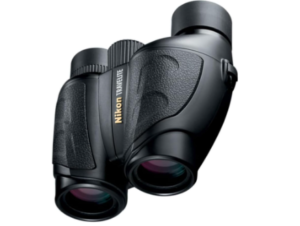
A cruise day can take you from the cabin to the observation deck, then ashore for an excursion, all before lunch. The Nikon Travelite 8×25 Binoculars fit naturally into that kind of itinerary, weighing just 9.3 ounces and measuring about 4.6 inches across. Their compact body slips easily into a day bag or stays within reach when a distant shoreline, seabird, or passing vessel suddenly catches your eye.
The 8x magnification also makes sense for viewing from a moving ship. You get enough enlargement to examine distant scenery and wildlife without making the image as sensitive to hand movement as a higher-powered binocular. That makes quick handheld viewing more comfortable when you’re scanning from the rail or following a moving subject.
A wide 293-foot field of view at 1,000 yards adds another advantage for cruise sightseeing. When a bird changes direction or a vessel moves across your view, the broader window makes it easier to keep track of the subject without constantly repositioning the binoculars.
Multicoated optics, aspherical lenses, and BAK4 reverse Porro prisms further support image quality while preserving the Travelite’s compact format.
Handling is another reason the Travelite works well as a grab-and-go cruise binocular. The rubber-armored body provides a secure grip, while the central focus system lets you adjust quickly as viewing distances change. Turn-and-slide eyecups and 14mm of eye relief also give you flexibility when positioning your eyes, including when viewing with glasses.
The compact design does come with a clear limitation: the 25mm objectives are better suited to daytime sightseeing than dim conditions. Early-morning departures, overcast weather, and fading evening light can favor a larger binocular with bigger objectives.
Features
- 293-ft field of view
- Multicoated optics
- Aspherical lenses
- BAK4 reverse Porro prisms
- 14mm eye relief
- Rubber-armored body
Pros
- Lightweight and compact
- Comfortable 8x handling
- Broad field of view
- Useful eye relief
Cons
- Limited low-light performance
2) Vortex Triumph HD 10×28 Binoculars
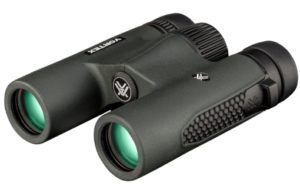
The Vortex Triumph HD 10×28 Binoculars take a more reach-oriented approach to compact cruise viewing. Their 10x magnification gives distant subjects more enlargement than the Nikon Travelite’s 8x, while the 28mm objectives keep them smaller than a conventional 42mm model.
At 12.8 ounces, they remain light enough for a day of sightseeing. However, the design puts more emphasis on distant detail than on being as light as possible.
That extra magnification can be useful when something interesting sits well beyond the observation deck. Distant seabirds, vessels, and coastline details appear larger through 10x, giving you more opportunity to examine them without carrying a full-size binocular.
The 28mm objectives offer a little more light-gathering capacity than a 25mm compact while keeping the body relatively small. Its HD optical system is designed to support resolution, color fidelity, edge-to-edge sharpness, and light transmission, while fully multicoated lenses further improve clarity. This combination is useful when you’re picking out fine details in distant scenery.
The physical design is built for outdoor use as well. Rubber armor provides a secure grip and added protection, while 15mm eye relief and adjustable eyecups allow flexible viewing, including with eyeglasses. In addition, the roof-prism design helps keep the binoculars compact, and the open-hinge body contributes to comfortable handling without adding unnecessary bulk.
Cruise conditions give the Triumph HD another practical advantage. The binoculars are nitrogen purged, O-ring sealed, waterproof, fogproof, and shockproof. That makes damp weather and changing temperatures less concerning on an exposed deck. They are not marine-specific binoculars, but their weather-resistant construction suits unpredictable outdoor conditions.
Once you’ve settled somewhere with a good view, tripod adaptability can also help during longer observation sessions. Instead of continuously holding a 10x image, you can use a compatible tripod adapter for a steadier setup.
Features
- 28mm objectives
- HD optical system
- Tripod adaptable
- Fully multicoated lenses
- Waterproof and fogproof construction
- Rubber-armored chassis
Pros
- Greater reach in a compact format
- Detailed HD optical system
- Generous eye relief
- Weather-resistant construction
Cons
- More difficult to steady
3) Pentax UP 8×25 WP Binoculars
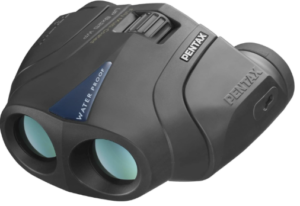
Thirdly, on the best compact cruise ship binoculars is the Pentax UP 8×25 WP, a compact 8x model designed around comfortable daytime viewing, generous eye relief, and weather-resistant construction. Its 25mm objectives keep the format manageable for travel, while the Porro-prism optical design gives it a different character from the smaller roof-prism models in this category.
The optical system uses fully multicoated lenses and aspherical elements to support a clear, sharp view across the image. That can be useful on a cruise when you’re scanning a coastline, following birds over open water, or taking in a wider scene rather than focusing on one fixed point. The 6.2-degree field of view also gives you a broad viewing window for this size of binocular.
The 8x magnification is well suited to handheld viewing from a ship. It provides enough reach for general wildlife and sightseeing without making deck movement as noticeable as it can be with higher magnification. Meanwhile, the 25mm objectives keep the binoculars compact enough for a shore excursion or for storing in limited cabin space.
The binoculars are also built with changing outdoor conditions in mind. O-ring sealing, nitrogen filling, and JIS Class 6 waterproofing provide protection against moisture, while the corrosion-resistant synthetic housing adds durability for travel. That protection can be useful when you’re moving between damp outdoor decks and cooler indoor spaces.
Its 15mm eye relief and twist-up eyecups give glasses wearers more flexibility when positioning their eyes. That becomes useful during longer viewing sessions, especially when you’re repeatedly scanning the water or coastline rather than taking only a quick look.
There is also a caveat around the focusing mechanism. Multiple customer reports have described the focus becoming stiff or jerky after extended use. Those reports do not establish how widespread the issue is, but they are worth considering if you expect to keep the binoculars for many years. Checking the focusing action and buying from a seller with a clear return policy can therefore be sensible.
Features
- Fully multicoated optics
- Aspherical lens elements
- 8x magnification
- 6.2° field of view
- 15mm eye relief
- JIS Class 6 waterproofing
- Nitrogen-filled construction
Pros
- Generous eye relief
- Broad field of view
- Compact travel-friendly format
- Strong weather protection
Cons
- Reported focus-mechanism concerns
4) Swarovski Optik CL Pocket 8×25 Binocular with Wild Nature Bag
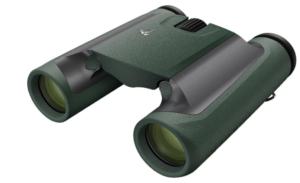
A binocular that folds down for pocket-sized storage changes how easily you can carry it. The Swarovski Optik CL Pocket 8×25 does exactly that, combining an 8×25 configuration with a folding design that slips into a day bag or the supplied Wild Nature field bag. On a cruise, where cabin storage and carrying space can be limited, that compact form makes the binocular easy to keep close at hand.
The main consideration is the price. This model sits firmly in the premium compact category, so its appeal depends on how much value you place on folding portability, optical performance, and long-term versatility. Its 25mm objectives also favor daytime use over dim early-morning or evening viewing, where larger 42mm binoculars can gather more light.
Furthermore, its 357-foot field of view at 1,000 yards is where the binoculars become particularly interesting. A broad viewing window can make scanning the horizon easier when you’re looking for whales, dolphins, seabirds, passing vessels, or a distant coastline. You can take in more of the surrounding scene at once instead of repeatedly repositioning the binoculars to find a moving subject.
The 8x magnification works naturally with that wide perspective. It provides enough enlargement for distant cruise sights while remaining easier to steady than a 10x compact from an observation deck. That balance is useful when you’re following wildlife across the water rather than holding the binoculars on one fixed point.
Viewing comfort is another notable strength. The 17mm eye relief gives glasses wearers generous room to position their eyes, while the twist-in eyecups allow further adjustment. For longer periods of sightseeing, that can make a meaningful difference, particularly when you’re repeatedly scanning rather than taking brief looks.
Despite its folding construction, the binoculars are designed for more than careful handling around the ship. Swarovski describes them as rugged and compact, making them suitable for travel and outdoor use beyond the cruise itself. The supplied Wild Nature field bag also gives you a practical way to carry them when heading ashore.
Features
- Foldable pocket-sized design
- Wild Nature field bag
- 25mm objective lenses
- 357-ft field of view
- 17mm eye relief
- Rugged construction
- Twist-in eyecups
Pros
- Exceptionally wide field of view
- Premium optical performance
- Folds down for easy carrying
- Generous eye relief
Cons
- Premium price
5) Nikon ProStaff 8x25mm ATB All-Terrain Binocular
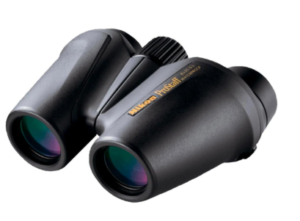
The Nikon ProStaff 8x25mm ATB All-Terrain Binocular is built for travelers who want a compact pair that can move easily between shipboard sightseeing and shore excursions. Its rubber-armored, waterproof, and fogproof construction gives it more protection than a basic travel compact, while its 12.5-ounce weight keeps it manageable throughout a full day.
Its 330-foot field of view at 1,000 yards is particularly useful when scanning open water. A broad viewing window makes it easier to locate seabirds, wildlife, passing vessels, or a distant coastline and keep them in sight. The 8x magnification also supports relatively comfortable handheld viewing from a moving deck.
There is a practical limitation to the compact 8×25 format. The 25mm objectives keep the binoculars small and portable but gather less light than larger 42mm models, making those better suited to dim early-morning or evening viewing. Likewise, 8x is easier to steady than 10x, but provides less enlargement when a subject is especially far away.
Multilayer-coated optics, aspherical eyepiece lenses, and BaK4 prisms give the ProStaff a solid optical foundation for daytime sightseeing. The combination complements its broad field of view, particularly when you’re taking in an expansive scene rather than trying to frame one distant subject as tightly as possible.
Where this model becomes particularly practical for travel is in its all-terrain construction. O-ring sealing and nitrogen filling provide waterproof and fogproof protection, while the rubber armor improves grip and helps shield the body from everyday knocks. That makes it well suited to changing weather and the movement between ship, port, and shore excursion.
The 15.5mm eye relief also gives glasses wearers generous viewing space, while the turn-and-slide eyecups allow further adjustment. That can be useful during longer periods of scanning, whether you’re watching from the rail or stopping along a coastal trail.
Features
- 8x magnification
- 25mm objectives
- 330-ft field of view
- Multilayer-coated optics
- Aspherical eyepiece lenses
- BaK4 prisms
- 15.5mm eye relief
- Waterproof and fogproof construction
Pros
- Wide field of view
- Rugged all-terrain design
- Generous eye relief
- Easy to carry
Cons
- Limited low-light performance
- Less reach than 10x models
6) Bushnell H20 8×25 Roof Prism Binocular
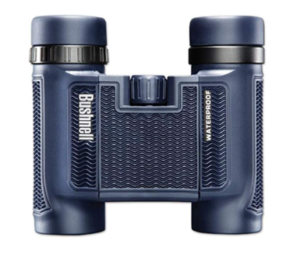
Another solid option among the best Compact Cruise Ship Binoculars is the Bushnell H2O 8×25 Roof Prism, which puts waterproof protection at the center of its design. IPX7-rated construction, O-ring sealing, and nitrogen purging are designed to keep water out and reduce internal fogging, making it well suited to exposed decks and sightseeing around the water.
Additionally, the 8x magnification works well for handheld viewing from a moving deck, providing enough reach for seabirds, passing boats, wildlife, and coastal scenery without making the view unnecessarily difficult to steady. The 25mm objectives also keep the binoculars compact and easy to carry between the ship and shore.
Around water, the physical design adds another practical advantage. Non-slip rubber armor provides a more secure grip when your hands are damp, while the large center-focus knob makes adjustments straightforward. Additionally, twist-up eyecups allow you to fine-tune the viewing position as well.
Glasses wearers may find the 12mm eye relief less generous than the 15mm-plus figures offered by several other compact models in this roundup. Those who need more space behind the eyepieces may therefore be more comfortable with an alternative that provides longer eye relief.
For a compact binocular intended to spend time around water, its waterproof construction makes it a practical choice within the best Compact Cruise Ship Binoculars.
Features
- IPX7 waterproof rating
- O-ring sealed construction
- Nitrogen purging
- Non-slip rubber armor
- BaK4 prisms
- Twist-up eyecups
Pros
- Strong waterproof protection
- Compact and easy to carry
- Secure grip in wet conditions
- Easy handheld viewing
Cons
- Less generous eye relief
More To Read:
- 4 Best Vortex Bow Hunting Rangefinders
- 4 Best Low Light Leupold Scopes
- 3 Best Bushnell Reflex Sights for 3-Gun
Choosing the Best Compact Cruise Ship Binoculars
The best compact cruise ship binoculars need to balance portability with the viewing conditions you’ll actually encounter at sea. Rather than chasing the smallest size or the highest magnification, consider how each factor affects what you can see and how comfortably you can use the binoculars throughout your trip.
Objective Lens Size
The objective lenses influence both portability and low-light performance. Compact 25–28mm objectives keep the binoculars small enough for travel, while larger 42mm lenses generally offer better performance as available light decreases. For daytime sightseeing, the smaller objectives are usually a sensible trade-off when keeping the binoculars easy to carry is a priority.
Magnification
For cruise viewing, 8x and 10x are the most relevant choices in this compact category. An 8x binocular is generally easier to steady when the ship is moving, while 10x provides greater enlargement for distant wildlife, vessels, and coastline details. If you’ll be scanning from the rail, steadiness can matter just as much as extra reach.
Field of View
A wide field of view can be especially valuable at sea. When you’re scanning a broad horizon for a whale, seabird, passing vessel, or approaching coastline, a wider view gives you more surrounding area to work with. It can also make moving subjects easier to follow once you’ve found them.
Eye Relief
This is particularly important for glasses wearers. More generous eye relief allows you to position your eyes farther from the eyepieces while still seeing the full image. If you’ll spend long periods watching from the deck, this can make for a more comfortable viewing experience.
Waterproofing and Fog Protection
A cruise exposes binoculars to conditions that ordinary sightseeing may not. Sea spray, rain, humidity, and temperature changes can all affect their usefulness. Waterproof and fogproof construction can therefore provide meaningful protection when you’re moving between an air-conditioned cabin and a damp outdoor deck.
Weight and Packability
Compact binoculars are meant to be carried, so consider what happens after several hours of sightseeing. A lightweight design is easier to keep around your neck or in a day bag, while folding models can take up even less space. That portability becomes especially useful when you’re moving between decks, heading ashore, or carrying other essentials.
Your Main Viewing Priorities
Finally, think about what you most want to see. If your cruise is mainly about scenery, general wildlife, and casual deck viewing, an easy-to-steady 8x compact may suit you well. If distant subjects are your priority, 10x can provide more reach. Frequent outdoor use in wet conditions, meanwhile, makes weather protection more important than it might be on a city sightseeing trip.
Best Compact Cruise Ship Binoculars FAQs
Can You Use Binoculars on a Moving Cruise Ship?
You can, although some binoculars are easier to steady from a moving deck than others. Lower magnification, particularly 8x, generally makes hand movement less noticeable, while 10x can provide more reach but requires a steadier grip. A wide field of view can also help when scanning for moving wildlife or following a subject across the water.
Should Cruise Binoculars Be Waterproof?
Waterproof construction is worth considering because cruise viewing often means exposure to sea spray, rain, humidity, and changing temperatures. Waterproof and fogproof binoculars can provide added protection when you’re using them on an open deck or moving between different environments.
Can I Use Compact Binoculars with Glasses?
Yes, but eye relief matters. Binoculars with around 15mm or more of eye relief generally give glasses wearers more room to position their eyes while maintaining a useful view. Adjustable eyecups can provide additional flexibility by helping you find a comfortable viewing position.
Are 8x or 10x Binoculars Better for a Cruise?
Neither magnification is automatically better. An 8x binocular is generally easier to steady and provides a wider, more forgiving view, which can be useful when watching from a moving ship. A 10x model offers greater enlargement for distant wildlife, vessels, and coastline details, but you’ll need to hold it more steadily. Your choice should depend on whether ease of handling or extra reach matters more to your viewing style.
Conclusion
Choosing the best compact cruise ship binoculars comes down to balancing portability, comfort, and viewing performance. Smaller 8x models are easy to carry and steady to use, while compact 10x binoculars offer more reach for distant wildlife and coastline details.
Consider features such as weather protection, eye relief, field of view, and low-light performance. The best pair is not simply the smallest, but the one that fits your cruise and gives you a comfortable, useful view of the sights along the way.