
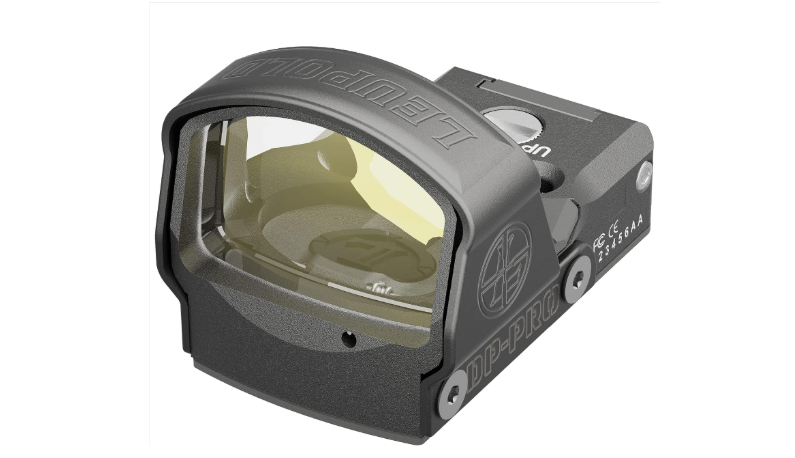
6 Best Night Vision Compatible Red Dot Sight

Ever looked through night vision behind a red dot and wondered why the reticle suddenly looks different? The best Night Vision Compatible Red Dot Sight behaves very differently from an ordinary red dot because its illumination is being viewed through another optical system. A setting that looks crisp and properly illuminated in daylight may appear as an intense glow through night vision, while a brightness level that seems too dim to the naked eye can become perfectly usable in darkness.

Night vision compatibility is about more than simply having a dedicated NV setting. The usable brightness range, reticle design, and how the aiming point contrasts with the night vision image can make a noticeable difference in real world use. Some optics give you enough control to keep the reticle visible without overwhelming the image, while others may leave you fighting excessive glare or a reticle that is difficult to pick up. Understanding these differences gives you a clearer picture of what genuine night vision compatibility looks like in practice.

Best Night Vision Compatible Red Dot Sight

1) Sig Sauer ROMEO4XT-PRO 1x20mm Red Dot Sight
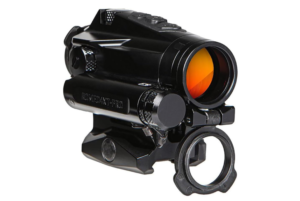
 

Sig Sauer ROMEO4XT-PRO 1x20mm Red Dot Sight

Night vision use is where the SIG Sauer ROMEO4XT PRO establishes its identity among the best Night Vision Compatible Red Dot Sight options. A dedicated night vision override gives direct access to NV compatible brightness settings, while the top mounted illumination control can be reached from either side without interfering with chest rigs or plate carriers. That arrangement keeps the controls accessible when quick adjustments matter.

Battery management takes a similarly practical approach. MOTAC activates the illumination when movement is detected and puts it to sleep when the sight remains stationary, helping deliver a stated 50,000 hour runtime from a single AAA battery.

The 1x20mm configuration also keeps the sight focused on rapid target acquisition, while its 2 MOA ballistic circle dot provides a clear central aiming point without making the reticle unnecessarily busy.

Protection becomes more important when the optic is expected to handle demanding field conditions. The IPX8 rating covers waterproof and fog proof protection, while MIL STD 810 testing reflects the ruggedness of its construction. At 6.88 oz, it is heavier than some alternatives, so weight may be a consideration for users building a particularly lightweight setup.

Key Features

  • Night vision override switch
  • 2 MOA ballistic circle dot reticle
  • MOTAC illumination technology
  • 50,000-hour battery life
  • IPX8 waterproof and fog proof construction
  • MIL STD 810 rated
  • 1x20mm optic

Pros

  • Dedicated night vision override
  • Long battery life
  • Rugged MIL SPEC construction
  • Accessible ambidextrous illumination control

Cons

  • Premium price
  • 6.88 oz weight

2) EOTECH EXPS3 Holographic Weapon Sight
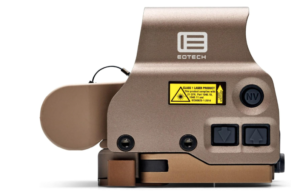
 

Best night vision compatible red dot sight

The EOTECH EXPS3 uses a 68 MOA ring and 1 MOA aiming dot to create a holographic sight picture built for quick target acquisition while retaining a precise central aiming point. This arrangement gives the optic a distinct visual presentation, while 10 dedicated night vision settings extend its use with compatible night vision devices.

Beyond the immediate sight picture, the EXPS3 can also accommodate magnification without changing the primary sight. Compatibility with 3x and 5x magnifiers extends its usefulness to applications where additional reach is needed. At the same time, its raised base supports lower iron sight co witnessing, while the quick detach locking lever makes installation and removal straightforward.

When conditions become less forgiving, the sight’s physical resilience becomes more relevant. Its construction is designed to remain functional even if the viewing window becomes partially shattered or obstructed, while water resistance extends to 33 feet. At 11.2 oz, however, it is heavier than several alternatives, which may matter to users who want to keep their overall setup light.

For extended use, battery endurance becomes a more important consideration. The EXPS3 provides 1,000 continuous hours at the nominal setting from a single CR123 battery, giving it considerably less runtime than some long endurance red dots. As a result, users planning prolonged use may need to pay closer attention to battery replacement intervals.

Key Features

  • Holographic aiming system
  • 68 MOA ring with 1 MOA dot reticle
  • 10 dedicated night vision settings
  • 3x and 5x magnifier compatibility
  • Quick detach locking lever
  • 33 ft water resistance

Pros

  • Rapid target acquisition
  • Precise holographic aiming
  • Extensive NV brightness adjustment
  • Magnifier compatibility

Cons

  • Shorter battery life

3) Holosun 509T-X2 Series Reflex Sight
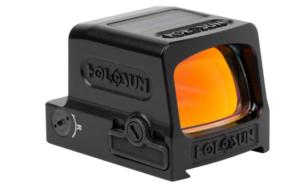
 

HOLOSUN 509T-X2 Series Reflex Sight

The Holosun 509T X2 takes a protection focused approach to compact reflex sight design. Its enclosed emitter sits within a Grade 5 titanium housing, helping shield the sight from dust, debris, and moisture. Four dedicated night vision settings further extend its usefulness in low light, making it a practical option among the best Night Vision Compatible Red Dot Sight choices for users who need NV capability in a compact enclosed optic.

Power management follows the same emphasis on readiness. Shake Awake puts the LED to sleep when the sight is inactive and reactivates it with movement, supporting the stated 50,000 hour battery life. Additionally, Solar Failsafe can provide another power source when suitable ambient light is available. Together, these functions help keep the optic ready without requiring constant manual adjustment.

The aiming system adds another layer of versatility. The Multi Reticle System allows users to choose a 2 MOA dot, 32 MOA circle, or combined circle dot reticle. Furthermore, the 1x configuration, parallax free design, and unlimited eye relief support rapid target acquisition. The included RMR adapter plate broadens the optic’s compatibility across different handgun setups.

Key Features

  • Enclosed Grade 5 titanium housing
  • 4 dedicated NV brightness settings
  • 2 MOA dot and 32 MOA circle reticle
  • Shake Awake technology
  • Solar Failsafe
  • 50,000 hour battery life
  • RMR adapter plate

Pros

  • Enclosed emitter design
  • Titanium construction
  • Long battery life
  • Solar backup
  • Flexible multi reticle system

Cons

  • Higher price

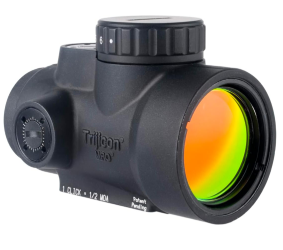
4) Trijicon MRO SD 1×25 Red Dot Sight
Best Night Vision Compatible Red Dot Sight

Keeping more of the surrounding scene in view is a major part of what makes the Trijicon MRO SD 1×25 Red Dot Sight distinctive. Its large aperture and tapered light path reduce the tube effect associated with more restrictive sight pictures. As a result, the optic provides a broader viewing area around the 2 MOA aiming point, making situational awareness one of its more notable strengths.

For users comparing the best Night Vision Compatible Red Dot Sight options, two of the MRO SD’s eight brightness settings are dedicated to night vision use, while the re engineered objective lens supports improved optical performance and magnifier compatibility. Advanced lens coatings further contribute to light transmission and clarity.

Construction and handling add to its practical appeal in the field. A forged 7075 T6 aluminum housing, fully sealed construction, and dry nitrogen filling reinforce its suitability for demanding conditions. At 4.8 oz, the MRO SD remains notably light for a rugged optic. Additionally, the ambidextrous brightness controls and sub flush windage and elevation adjusters keep operation practical across different setups. Its two NV settings are less extensive than those of some competing sights, and it does not include Solar Failsafe or Shake Awake.

Key Features

  • Large aperture with tapered light path
  • 2 MOA red dot reticle
  • Re engineered objective lens
  • Magnifier compatibility
  • Forged 7075 T6 aluminum housing
  • Fully sealed construction
  • 2 dedicated night vision settings

Pros

  • Broad viewing area
  • Magnifier compatibility
  • Lightweight 4.8 oz design
  • Rugged construction

Cons

  • Only 2 NV settings
  • No Solar Failsafe or Shake Awake

5) Holosun 510C Multi-Reticle Red Dot Sight
 

Best Night Vision Compatible Red Dot Sight

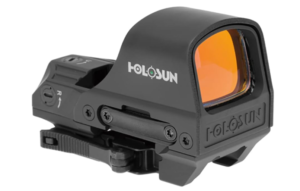
Another product in this lineup is the Holosun 510C Multi Reticle Red Dot Sight, an open reflex optic designed for a wide field of view and rapid target acquisition. Its large viewing window provides a broad sight picture, while the selectable 2 MOA dot, 65 MOA circle, or circle dot reticle lets users choose an aiming reference that suits different shooting situations. The aluminum housing and titanium hood provide added protection while maintaining the optic’s open emitter design.

The 510C also offers convenient mounting and sight alignment. Its integrated quick detach mount allows the optic to be installed or removed quickly, while the 1.41 inch dot height supports absolute co witness alignment. Automatic brightness adjustment helps keep the reticle visible as lighting conditions change, and the 1x configuration keeps the optic focused on close range and rapid target acquisition. Adding a compatible magnifier can further extend its effective range and versatility.

For low light applications, the 510C includes two dedicated night vision brightness settings, giving it a useful place among the best Night Vision Compatible Red Dot Sight options. Its Solar Failsafe system can supplement battery power when adequate light is available, while Shake Awake technology activates the optic when movement is detected and helps conserve power during periods of inactivity. Battery life can reach up to 50,000 hours at setting 6, providing substantial endurance for extended use.

The open emitter design is worth considering because it leaves more of the optical system exposed compared with an enclosed optic. Even so, the 4.94 oz weight keeps the 510C relatively light, while its integrated mount and open reflex configuration make it particularly well suited to carbines, PCCs, and shotguns.

Key Features

  • 2 MOA dot and 65 MOA circle reticle
  • 40-degree open field of view
  • Solar Failsafe
  • Shake Awake technology
  • 50,000-hour battery life
  • Quick detach absolute co witness mount

Pros

  • Wide viewing area
  • Solar backup power
  • Flexible reticle system

Cons

  • Open emitter design

6) Hatsen 558 Holographic Red Dot Sight
 

Hatsen 558 Holographic Red Dot Sight

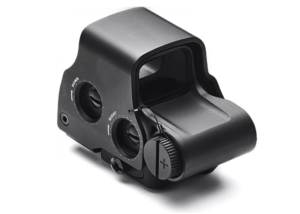
Lastly, we have the Hatsen 558 Holographic Red Dot Sight, which takes a straightforward approach to low light use with an integrated night vision function and dedicated NV button. Its second-generation lens upgrade is designed to increase light transmittance and reduce parallax, while the brighter red dot helps maintain visibility across different lighting conditions. A lens designed to eliminate mirror effects can also reduce unwanted reflections from the user’s face or surroundings.

The 20mm quick detach rail mount makes installation and removal straightforward, while compatibility with G33, G43, and G45 3x or 5x magnifiers gives the sight additional setup flexibility. The combination gives the 558 more flexibility when moving between unmagnified use and a magnified sight picture.

Night vision operation remains simple through the dedicated NV button, which switches between standard and NV modes when used with compatible night vision goggles. The function is therefore dependent on external night vision equipment rather than providing standalone night vision capability. That distinction is important for users comparing the 558 with optics that integrate more extensive NV functionality.

The 7075 aluminum housing, hard anodized outer shell, and stated resistance to impacts up to 550g add a measure of physical protection. Its positioning as an airsoft focused optic, however, is the more important consideration when comparing it with the other sights in this lineup. For demanding tactical applications, that intended use deserves careful consideration before the sight is compared directly with purpose built professional optics.

Key Features

  • Second generation upgraded lens
  • Integrated night vision function
  • Dedicated NV button
  • 7075 aluminum housing
  • No mirror effect lens
  • 20mm quick detach rail mount
  • 3x and 5x magnifier compatibility

Pros

  • Simple NV mode operation
  • Quick detach mounting
  • Upgraded optical clarity
  • Rugged aluminum housing

Cons

  • Requires NV goggles for night vision function

You can also read:

What to Look for in the Best Night Vision Compatible Red Dot Sight

You’re probably wondering what specifically you should look for when evaluating the best Night Vision Compatible Red Dot Sight options. Below, we break down the key factors worth considering before making a choice.

Night Vision Compatibility

When you’re comparing night vision compatible red dots, don’t stop at the presence of an NV setting. Check how low the brightness can go and whether the lowest settings give you a usable aiming point without overwhelming the image through your night vision device. This becomes particularly important as conditions change from dusk into darkness.

The controls matter too. Dedicated NV settings can make the transition into night vision use easier, while accessible brightness controls allow you to make adjustments without taking unnecessary attention away from the target. More settings are not automatically better. A smaller number of genuinely usable NV levels can be more valuable than a long list of settings that are difficult to use effectively.

Reticle and Brightness Control

A reticle that looks perfectly clear in daylight can behave very differently once you’re looking through night vision. A simple dot gives you a clean central aiming reference, while a circle dot provides a larger visual cue that may be easier to pick up quickly. The amount of information you want in the sight picture should therefore influence the reticle style you prefer.

Brightness presents a different concern. Too much illumination can overpower the darker image produced through night vision, while too little can make the aiming point difficult to distinguish as ambient light increases. Rather than focusing only on the number of brightness settings, look at how effectively they cover the conditions in which you expect to use the optic.

Sight Picture and Optical Clarity

Your first impression of a red dot often comes from how naturally your eye finds the aiming point. A more open viewing window gives you greater freedom to locate the reticle, which can be useful when your view of the target is already limited by darkness. A more restrictive window may require more precise positioning.

Optical clarity takes on added importance when there is little ambient light to work with. Look at how cleanly the optic presents the surrounding scene instead of focusing only on reticle sharpness. If you plan to add a magnifier, consider that combination before buying. The sight may perform well on its own but become less practical if the magnifier makes target acquisition feel awkward.

Battery Life and Power Management

The runtime printed on the specification sheet does not necessarily tell you how the optic will perform during actual use. Brightness levels, how long the sight remains active, and how frequently it is left powered between uses can all affect battery consumption. A high advertised figure is useful, but it should be viewed in the context of how you expect to operate the sight.

Motion activation, automatic shutoff, and solar backup can change that equation. These functions can reduce unnecessary battery consumption or provide another power source when conditions allow. If you expect the optic to remain ready for long periods, look at the complete power system rather than judging it by maximum runtime alone.

Durability and Environmental Protection

Think about the conditions you expect the optic to encounter before deciding how much protection you need. Rain, dust, impacts, and temperature changes can all put an optic under stress. Waterproofing, sealing, fog protection, and impact resistance therefore deserve attention if the sight will regularly be exposed to demanding outdoor conditions.

Weight is the other side of that decision. More substantial construction can add protection, but it also adds weight to the firearm. If you expect to carry and maneuver the setup for extended periods, a lighter optic may make more sense than automatically opting for the heaviest construction available.

Mounting and Overall Setup

An optic does not work in isolation. Mount height, backup sights, a magnifier, and other equipment can all affect how naturally the complete setup comes together. If night vision use is part of the plan, consider how the sight’s position affects your ability to get behind it comfortably.

The mounting standard matters as well. Check whether the optic works with the mount or adapter you intend to use and whether it provides the co witness position you need. A quick detach system can also be useful if you expect to remove or change the sight.

Finally, look at the complete configuration rather than the optic alone. An impressive sight can still be a poor fit if it interferes with the equipment around it or forces compromises elsewhere. The better choice is the model that integrates naturally with the setup you actually intend to use.

Best Night Vision Compatible Red Dot Sight FAQs

Can a Red Dot Sight Be Used with Any Night Vision Device?

Not necessarily. The sight needs a brightness range that works with the specific night vision device you are using, since excessive illumination can cause the reticle to bloom and interfere with the image. Dedicated NV settings are important, but their usefulness ultimately depends on how well those settings match the conditions in which you plan to operate.

Do You Need a Magnifier with a Night Vision Compatible Red Dot Sight?

A magnifier can be useful when you need more detail or reach beyond what a 1x sight picture provides, but it is not essential for every setup. If your priority is fast target acquisition at closer distances, staying with the unmagnified optic keeps the setup simpler. If additional reach is part of your setup, look for an optic that works well with a compatible 3x or 5x magnifier.

Which Is Better for Night Vision, a Red Dot or Holographic Sight?

Both can be effective, but the better option depends on what you want from the sight picture. Red dots generally offer a simpler aiming reference and can provide very long battery life, while holographic sights can provide a larger reticle design geared toward rapid target acquisition. For night vision use, brightness range and reticle visibility through the device matter more than the sight type alone.

Is More Night Vision Brightness Settings Always Better?

Not always. What matters more is whether those levels remain useful as conditions move from ambient light to darkness. A sight with fewer well calibrated NV settings can be more useful than one with numerous levels that are difficult to use effectively.

Conclusion

Night vision changes the rules for how a red dot performs, and that is exactly why the search for the best Night Vision Compatible Red Dot Sight cannot stop at checking a box on a spec sheet. Brightness range, reticle design, and how the dot actually renders once amplified all shape whether an optic stays usable in the dark or becomes a distraction that blocks the target. What looks flawless to the naked eye during the day can behave in a completely different way once night vision takes over, and the reverse is just as true.

The real measure is how naturally an optic carries its aiming point through the conditions in which you intend to use it. The right choice will not just survive that transition from daylight to darkness. It will feel just as controlled and precise in both.