
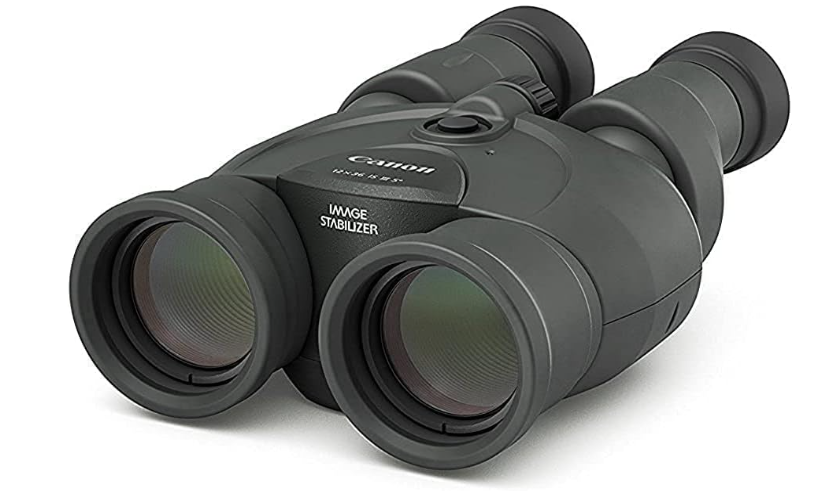
The night sky is far more alive than it first appears and the best astronomy binoculars are your gateway to discovering it. In a single glance, they can transform a scattering of faint dots into glowing star clusters, sweeping galaxies, and breathtaking lunar detail.
Astronomy binoculars offer an immediate, intuitive way to explore the universe. You simply lift them to your eyes, and the sky opens up. There’s a sense of effortless discovery. No steep learning curve, no complex adjustments, just a direct visual bridge between you and the cosmos. That simplicity is part of what makes them so powerful; they invite you to observe more often, more freely, and with less hesitation.
But with so many options on the market, finding the right pair can feel like navigating the stars themselves. The good news? Once you know what to look for, the perfect binoculars can open up a whole new world above you one that’s waiting, every clear night, to be explored.
Best Astronomy Binoculars
1) Celestron SkyMaster Pro 20x80mm Porro Prism Binoculars
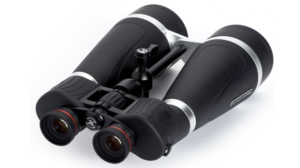
The Celestron SkyMaster Pro 20x80mm Porro Prism Binoculars combine high magnification with large objective lenses, allowing you to pull in an incredible amount of light. This makes them especially effective for observing faint celestial objects like nebulae, star clusters, and even distant galaxies, all with remarkable clarity.
A premium optical system built with BaK-4 prisms and fully multi-coated lenses makes them one of the best astronomy binoculars. Celestron’s proprietary XLT coatings enhance light transmission, resulting in brighter, sharper images with improved contrast and true-to-life color. The 20x magnification offers a powerful close-up perspective, making distant celestial objects feel surprisingly within reach.
The innovative RSR (Reflex Sight Ready) rail is another incredible feature. This detachable rail allows you to mount an optional red dot finder or reflex sight, a feature rarely seen in binoculars. It significantly improves your ability to locate and track objects in the sky, solving one of the most common challenges in astronomy binocular use: accurate aiming.
Durability is another highlight of the SkyMaster Pro. The binoculars are built with a rugged polycarbonate housing and wrapped in protective rubber armor, ensuring they can withstand rough handling and challenging outdoor conditions.
They are fully waterproof and nitrogen purged, preventing internal fogging and making them reliable in varying weather environments. This robust construction means you can confidently take them on camping trips, remote stargazing sessions, or any outdoor adventure without worry.
Pros
- Exceptional light-gathering ability thanks to large 80mm objective lenses
- Bright, sharp, and high-contrast views with fully multi-coated XLT optics
- BaK-4 prisms deliver superior image clarity and edge-to-edge sharpness
- Unique RSR rail allows for easy mounting of a red dot finder for precise targeting
- Durable, waterproof, and fog-proof construction for all-weather use
- Excellent value for performance at its price point
Cons
- Large and heavy
2) Kowa High Lander Observation 32x82mm Roof Prism Binoculars
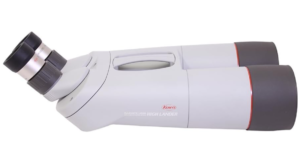
The Kowa High Lander Observation 32x82mm Roof Prism Binoculars are a high-end astronomy binoculars, crafted for those who demand uncompromising optical excellence. From the moment you look through them, it’s clear these are not ordinary binoculars. They deliver a level of clarity and precision that rivals premium telescopes.
What truly sets these binoculars apart is Kowa’s use of Prominar pure fluorite crystal objective lenses. Unlike standard glass, fluorite virtually eliminates chromatic aberration, meaning you won’t see distracting color fringing around bright stars or the moon. Instead, you get razor-sharp, high-contrast views with exceptional color fidelity. This level of optical purity allows faint celestial details to stand out more vividly, making deep-sky observation far more rewarding.
The 32x wide-angle eyepieces provide powerful magnification while maintaining a generous field of view. This balance is ideal for sweeping across star fields or locking onto distant astronomical objects with precision. The wide-angle design enhances the sense of depth and space, giving you a more expansive and engaging view of the night sky.
Despite its premium performance, the binocular’s construction is impressively practical. The die-cast aluminum body offers a strong yet relatively lightweight frame, ensuring durability without excessive bulk. It’s built to handle regular outdoor use while maintaining structural integrity over time.
Additionally, they are fully waterproof and nitrogen purged, preventing internal fogging and ensuring consistent performance even in humid or rapidly changing weather conditions.
Pros
- Prominar fluorite crystal lenses virtually eliminate chromatic aberration
- Exceptionally sharp, high-contrast, and color-accurate images
- Powerful 32x magnification with wide-angle eyepieces for immersive viewing
- Durable yet relatively lightweight die-cast aluminum construction
- All-weather construction for reliable outdoor performance
- Premium build quality suited for serious astronomy enthusiasts
Cons
- High price point compared to standard astronomy binoculars
3) Opaita 12X-36×52 HD Binoculars
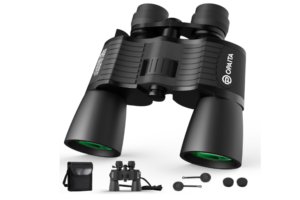
With a professional-grade 12–36x zoom range, these binoculars allow you to adapt your view effortlessly depending on your target. Lower magnifications are perfect for tracking star clusters and broader celestial landscapes, while higher settings let you zero in on finer details with impressive clarity. This flexibility makes them equally compelling for daytime use without compromising their core strength in astronomy.
As the next candidate for best astronomy binoculars, they are engineered to impress. The BaK-4 prisms and fully multi-coated (FMC) optics maximize light transmission up to an impressive level. The result? Bright, vivid images even in low-light conditions.
The combination of a large objective lens and well-designed eyepieces enhances brightness while maintaining sharpness across the field of view. The result is an image that feels crisp, contrast-rich, and immersive, with minimal distortion at the edges.
Comfort and usability are equally well thought out. The 20mm eyepieces are designed to align naturally with the human eye, making extended viewing sessions more comfortable. Adjustable eye relief and foldable eyecups ensure that both eyeglass wearers and non-wearers can enjoy a clear, strain-free view. The smooth zoom function and straightforward focusing system make operation intuitive, even when transitioning quickly between targets.
In terms of build, the binoculars offer a secure, ergonomic grip with a non-slip finish, ensuring stability during prolonged use. Their rugged design resists dust and wear, making them reliable for both outdoor adventures and dedicated stargazing nights.
Pros
- Versatile 12–36x zoom range for both wide-field and detailed observation
- Bright, high-contrast images with BaK-4 prisms and FMC coatings
- Large objective lenses enhance light capture for clearer views
- Comfortable eyepiece design with adjustable eye relief
- Smooth zoom and simple focusing mechanism
- Non-slip, durable construction for steady handling
Cons
- Requires steady hands or support at maximum zoom levels
- Bulkier than compact binoculars, reducing portability
4) Vortex Optics Viper HD Roof Prism 12×50 Binoculars
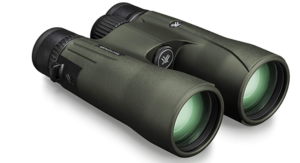
Our review of the best astronomy binoculars is incomplete without the Vortex Viper HD 12×50. If you are seeking a versatile, high-performing optic, this is for you. With 12x magnification paired with 50mm objective lenses, these binoculars gather ample light for night sky observation while remaining compact enough to handle comfortably.
At the core of their performance is a high-density optical system designed to deliver outstanding resolution and remarkable edge-to-edge sharpness. Every view feels crisp and well-defined, with minimal distortion across the field.
Complementing this is Vortex’s XR anti-reflective lens coating, which enhances light transmission and ensures bright, vivid images even in low-light conditions. For stargazers, this means clearer views of celestial objects with improved contrast and detail, especially during dusk or under darker skies.
Ease of use is another area where the Viper HD excels. The locking right-eye diopter allows you to fine-tune focus to match your vision precisely, ensuring a personalized viewing experience. The central focus wheel is smooth and responsive, making it easy to achieve sharp images quickly. Twist-up eyecups provide adjustable eye relief, offering comfort whether you wear glasses or not. This is an essential feature for longer observing sessions.
The binoculars are built with durability in mind, thanks to a rugged rubber-armored chassis that not only protects against impacts but also offers a secure, non-slip grip. Thoughtfully designed thumb indents enhance ergonomics, allowing for steady handling during extended use.
Internally, argon purging combined with O-ring seals ensures complete waterproof and fog-proof performance, so changing weather conditions won’t interrupt your viewing. The exterior lenses are protected by Armortek coating, which resists scratches, oil, and dirt helping maintain optical clarity over time.
To top it off, the included GlassPak chest harness makes carrying these binoculars effortless. It keeps them secure, easily accessible, and evenly distributed across your body, reducing strain during long nights under the stars or full days outdoors.
Pros
- Powerful 12×50 configuration offers excellent light gathering for astronomy
- High-density optics provide sharp, detailed, edge-to-edge clarity
- XR anti-reflective coatings enhance brightness and contrast in low light
- Durable, rubber-armored body with ergonomic grip design
- Waterproof, fog-proof, and scratch-resistant for long-term reliability
- Smooth focusing system with adjustable diopter for personalized clarity
- Comfortable to carry with included GlassPak chest harness
Cons
- Narrower field of view compared to lower magnification model
5) Nikon ACULON A211 10-22X50 Binoculars
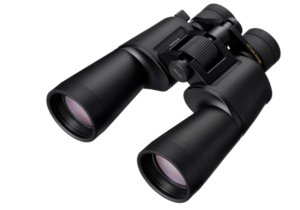
The A211 are crafted with versatility in mind. These binoculars allow you to shift between lower and higher magnifications, making them equally capable of wide-sky scanning and more detailed observation. For casual stargazers and beginners, they offer an accessible yet rewarding way to explore the night sky without investing in bulky or complex equipment.
One of the standout qualities of the ACULON A211 series is its thoughtful, lightweight construction. Nikon has prioritized comfort and usability, ensuring these binoculars are easy to carry and hold for extended periods. The ergonomic design fits naturally in your hands, while the durable rubber-armored exterior provides a secure, non-slip grip even in damp conditions.
In terms of optics, these binoculars deliver impressive clarity for their class. Built with aspherical, multicoated Eco-Glass lenses, they produce bright, well-defined images across a variety of lighting conditions. The large 50mm objective lenses gather plenty of light, which is essential for astronomy, helping you pick out lunar details, star clusters, and brighter deep-sky objects with ease. The image quality feels crisp and vibrant, especially considering the price point, making them an excellent value for those just getting started.
Comfort during long viewing sessions is further enhanced by the turn-and-slide rubber eyecups. These allow you to customize the eye relief to suit your preference, whether you wear glasses or not. Combined with a smooth central focus knob, achieving sharp focus is quick and intuitive. No complicated adjustments required. This simplicity makes the ACULON A211 particularly appealing for beginners who want a straightforward, user-friendly experience.
Beyond astronomy, these binoculars are built to handle a wide range of activities. Their multi-purpose design makes them just as useful for wildlife viewing, sporting events, and general outdoor exploration. Durable, eco-conscious materials ensure they can withstand regular use while remaining lightweight enough to take anywhere.
Pros
- Bright, clear images with multicoated Eco-Glass lenses
- Large 50mm objective lenses enhance light gathering for night use
- Lightweight and ergonomic design for comfortable handling
- Turn-and-slide eyecups for adjustable and comfortable viewing
- Smooth central focus system for quick, easy adjustments
- Durable rubber armor provides a secure grip
- Excellent value for money
Cons
- Narrower field of view at maximum zoom
6) Maven B2 45mm ED Binoculars
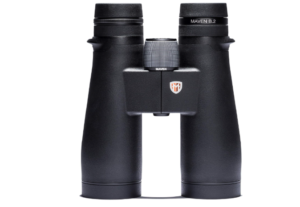
The Maven B2 are designed with a clear emphasis on low-light excellence. These binoculars shine when the sky darkens and subtle celestial details begin to emerge. They strike a thoughtful balance between magnification and light-gathering ability, making them ideal for observing the moon, star clusters, and brighter deep-sky objects without the bulk of oversized astronomy optics.
At the heart of the B.2’s performance is its advanced optical design. The inclusion of an Abbe-Koenig prism system allows for exceptional light transmission, ensuring that as much available light as possible reaches your eyes.
This is paired with an optical field flattener, which works to maintain sharpness across the entire viewing area. The result is a beautifully uniform image, clear, bright, and impressively consistent from the center all the way to the edges. For stargazers, this means less distortion and more immersive, natural-looking views of the night sky.
What truly elevates the viewing experience is the level of clarity these binoculars provide. The image quality is strikingly crisp, with fine details rendered cleanly and without the softness that can creep into lesser optics.
Whether you’re scanning constellations or focusing on lunar features, the sharpness remains consistently high. The smooth, almost fluid focusing mechanism further enhances usability, allowing you to dial in precise focus effortlessly and maintain it with minimal adjustment.
Despite their optical prowess, the Maven B.2 binoculars remain practical for extended use. Their design reflects a careful consideration of balance and handling, ensuring they feel stable and comfortable during longer observation sessions.
Pros
- Exceptional low-light performance ideal for astronomy and twilight viewing
- Abbe-Koenig prism design maximizes light transmission
- Field flattener ensures sharp, edge-to-edge image clarity
- Remarkably crisp and detailed visuals
- Smooth, precise focusing mechanism for effortless adjustments
- Well-balanced design for comfortable extended use
Cons
- Premium price point may not suit all budgets
7) Celestron SkyMaster 15×70 Astronomy Binoculars
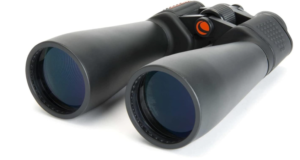
Finally, we have the Celestron SkyMaster 15×70 Astronomy Binoculars. They are built around large 70mm objective lenses which pull in substantial amounts of light, making faint celestial objects more visible and detailed.
Their strength lies in their ability to perform exceptionally well in low-light environments. Equipped with BaK-4 prisms, the SkyMaster maximizes light transmission, producing images that are both luminous and richly detailed. This makes them particularly effective during twilight hours and nighttime observation, where clarity and brightness are critical.
The 15x magnification strikes a practical balance as it powerful enough to reveal distant objects clearly, yet still manageable when mounted for steady viewing.
Given their size and magnification, these binoculars truly shine when paired with a tripod. Fortunately, they’re designed with convenience in mind, featuring a built-in ¼”-20 adapter that allows quick and secure attachment to most standard tripods. Once mounted, the viewing experience becomes far more stable, letting you fully appreciate the detail and depth these optics can provide over extended observation sessions.
Durability is another feature that makes them one of the best astronomy binoculars. The rubber-armored exterior not only protects against bumps and minor impacts but also ensures a firm, non-slip grip during handling. The water-resistant design adds an extra layer of reliability, allowing you to continue observing even if conditions become slightly damp or unpredictable.
Pros
- Large 70mm objective lenses provide excellent light-gathering ability
- Bright and detailed images thanks to BaK-4 prisms
- Tripod adaptable for stable, long-duration observation
- Durable rubber-armored body with a secure grip
- Water-resistant construction for added reliability
Cons
- Not ideal for quick, handheld use
Choosing the Best Astronomy Binoculars
Choosing the best astronomy binoculars isn’t just about chasing the highest magnification. It’s about finding the right balance between optical performance, usability, and real-world viewing conditions. What truly matters is how well the binoculars help you see more, see clearly, and stay comfortable during extended stargazing sessions. Here are some factors to have in mind before making a purchase decision.
Objective Lens Diameter
One of the most important considerations is objective lens diameter. This is the second number in a binocular specification (for example, 10×50 means 50mm lenses). Larger apertures gather more light, which is critical for astronomy since you’re observing faint objects like star clusters, nebulae, and distant galaxies. A 50mm lens is often considered a sweet spot for beginners, while 70mm or larger binoculars will reveal significantly more detail but at the cost of increased weight and the likely need for a tripod.
Magnification
Closely tied to aperture is magnification. While it may be tempting to go for higher magnification, more isn’t always better. Higher magnification narrows your field of view and amplifies hand shake, making it harder to keep objects steady. For handheld stargazing, 7x to 10x is typically ideal. If you plan to use a tripod, you can push into 15x or 20x territory, which allows you to resolve finer details like lunar craters or separate stars in dense clusters.
Exit Pupil
Another key factor when purchasing the best astronomy binoculars is the exit pupil. This determines how bright the image appears. It’s calculated by dividing the aperture by the magnification (e.g., 10×50 gives a 5mm exit pupil). A larger exit pupil delivers brighter views, especially in dark conditions, but it should also match your eye’s ability to dilate in low light. For most adults, an exit pupil between 5mm and 7mm works very well for astronomy.
Optical Quality and Coatings
Optical quality and coatings play a huge role in image clarity. Fully multi-coated lenses improve light transmission and reduce reflections, which is essential when observing faint celestial objects. High-quality glass (such as BaK-4 prisms) ensures sharper, brighter images with better contrast. Poor optics, even with large lenses, will result in dim or blurry views, so this is an area where cutting corners can be disappointing.
Field of View
The field of view is especially important for astronomy because it determines how much of the sky you can see at once. A wider field of view makes it easier to locate objects and enjoy sweeping views of star fields and the Milky Way. Lower magnification binoculars typically offer wider FOVs, which is why 7×50 or 8×42 models are popular for scanning the sky.
Weight and Ergonomics
You should also consider weight and ergonomics, particularly if you plan to observe for extended periods. Heavier binoculars can quickly lead to fatigue and shaky viewing. If the binoculars are too heavy to hold comfortably, you’ll need a tripod or monopod, which adds to the overall setup but greatly improves stability and viewing detail.
Eye Relief and Comfort
Eye relief and comfort are often overlooked but are crucial, especially if you wear glasses. Longer eye relief allows you to see the full field of view without removing your glasses. Comfortable eyecups and smooth focusing mechanisms also enhance the overall observing experience, particularly during long sessions under the stars.
Build Quality
Durability and build quality matter as well. While astronomy is typically done in calm conditions, binoculars that are water-resistant, fog-proof, and well-built will last longer and perform reliably in varying environments. A sturdy construction also helps maintain optical alignment over time.
Portability and Intended Use
Finally, think about portability and intended use before investing in the best astronomy binoculars. If you want something easy to carry on trips or quick stargazing sessions, a compact and lightweight pair may be preferable. If your goal is more serious observation from a fixed location, larger, tripod-mounted binoculars will offer far superior performance.
Read: 5 Best Compact Binoculars
Best Astronomy Binoculars
Are Bigger Objective Lens Always Better for Stargazing?
Larger objective lenses (like 70mm or 80mm) do gather more light, which makes faint celestial objects appear brighter and more detailed. However, “bigger” also means heavier and less portable. While a 15×70 binocular will outperform a 10×50 in terms of brightness and deep-sky visibility, it can be tiring to hold and usually requires a tripod. For many users, a 50mm aperture strikes the perfect balance between performance and usability. So while bigger lenses can enhance your experience, they’re only “better” if you can comfortably use them.
Do I Need a Tripod for Astronomy Binoculars?
Not always, but it depends on the size and magnification of your binoculars. Lightweight models like 7×50 or 10×50 are designed for handheld use and are perfectly suitable for casual stargazing. However, once you move into larger and more powerful binoculars like 15×70 or above a tripod becomes highly recommended. It stabilizes the image, reduces fatigue, and allows you to see finer details that would otherwise be lost due to shaking. Even with smaller binoculars, using a reclining chair or bracing your arms can significantly improve your viewing experience.
What Can I Realistically See with Astronomy Binoculars?
Astronomy binoculars can reveal far more than many people expect. You’ll clearly see the Moon’s craters and surface texture, track the four largest moons of Jupiter, and observe star clusters like the Pleiades in stunning detail. Under dark skies, you can also detect bright nebulae, the Andromeda Galaxy, and dense star fields along the Milky Way. While binoculars won’t match the magnification of a telescope, they excel at providing wide, immersive views of the sky, making them ideal for both beginners and experienced observers who enjoy sweeping celestial panoramas.
Conclusion
In the end, the best astronomy binoculars aren’t just about specs. They’re about the experience they unlock. The right pair turns a simple glance at the night sky into something unforgettable, revealing hidden stars, glowing clusters, and the quiet beauty of distant worlds. With so many options out there, it can feel overwhelming to choose but once you understand what truly matters, the decision becomes much clearer.