
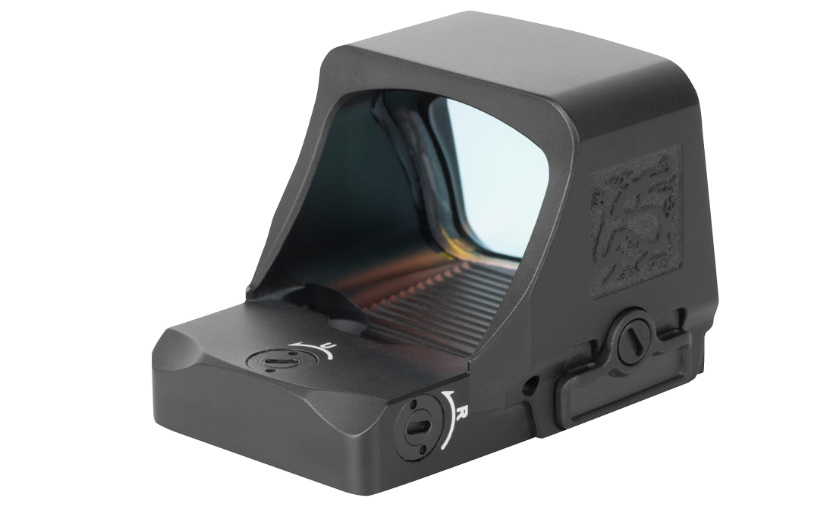
Searching for the best Red Dot for PDP Compact? You’ve landed in the right place.
We’ve taken a closer look at several red dot sights, focusing on the differences that can actually affect your choice. Some are built around protection and durability, others give you a wider sight picture or a faster-to-find aiming point, and some take a more straightforward approach.
Knowing where those differences matter can make it much easier to narrow down the right optic for your needs.
Best Red Dot for PDP Compact
Let’s take a closer look at the sights that made our list and what sets each one apart.
1) Aimpoint ACRO P-2 3.5 MOA Red Dot Sight
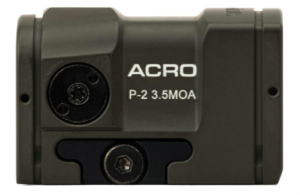
Aimpoint ACRO P-2 takes a particularly rugged approach to pistol optics, making it a compelling choice for a PDP Compact that may see demanding use. Its fully enclosed optical channel shields the LED emitter from dirt, debris, and the elements, while its housing handles the repeated shock and vibration generated by semi-automatic pistol slides.
Aimpoint says the sight has survived testing through more than 20,000 rounds of .40 S&W ammunition, giving the ACRO P-2 a stronger durability focus than many open-emitter alternatives.
Its 3.5 MOA dot provides a useful middle ground for a pistol sight. It is large enough to pick up quickly at typical handgun distances without taking up excessive space on the target. The improved LED emitter also produces a crisp aiming point, with adjustable intensity for different lighting conditions.
The four night-vision-compatible settings and six daylight settings give the optic flexibility across different environments. More importantly, the enclosed design keeps the aiming system protected from outside contaminants.
Battery life is another strong point. A higher-capacity CR2032 battery delivers up to 50,000 hours of constant-on use, or more than five years under Aimpoint’s stated conditions. The intensity controls sit beside the battery compartment and use a more tactile keypad, helping reduce the chance of accidental adjustments.
For a PDP Compact owner looking for a durable enclosed optic with long battery life and a straightforward 3.5 MOA aiming point, the ACRO P-2 presents a very convincing package.
Pros
- Fully enclosed emitter
- 50,000-hour battery life
- Rugged construction
- 3.5 MOA dot
- Night vision compatible
Cons
- Bulkier enclosed profile
- Premium price
2) Holosun 509T-X2 Series Reflex Sight
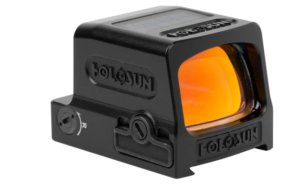
The Holosun 509T-X2 gives the PDP Compact more flexibility in how the aiming point appears. Its Multi-Reticle System lets you choose between a 2 MOA dot, a 32 MOA circle, or the circle-and-dot combination.
The dot keeps the sight picture clean for precise aiming, while the larger circle gives your eye a quicker reference when speed matters. That makes the 509T-X2 a particularly appealing choice if you want to adjust the sight picture to different shooting preferences without changing optics.
The sight also takes a protected approach to its construction. Its enclosed emitter sits inside a Grade 5 titanium housing, shielding the aiming system from dust, debris, and moisture. Holosun rates the optic IP67 for water and dust resistance and gives it 5000G vibration resistance.
For a PDP Compact that may see regular carry or demanding use, that sealed design provides an added layer of protection without giving up the reticle flexibility that defines this optic.
Day-to-day operation is another strong part of the package. A side-loading CR1632 battery can be replaced without removing the optic from the slide, while battery life reaches up to 50,000 hours at setting 6.
Shake Awake activates the illumination when movement is detected, and Solar Failsafe can provide backup power in suitable lighting. Lockout Mode can also prevent accidental changes to your chosen settings.
Pros
- 50,000-hour battery life
- Selectable 2 MOA dot and 32 MOA circle
- Side-loading battery
- Fully enclosed emitter
- Shake Awake and Solar Failsafe
- Titanium housing
Cons
- Smaller viewing window
3) SIG SAUER ROMEO5 Gen I & Gen II 1x20mm 2 MOA Sight
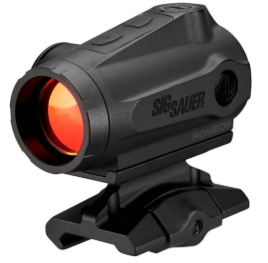
Mounting is the first thing to consider with the SIG SAUER ROMEO5 on a PDP Compact. Unlike the pistol-mounted optics above, ROMEO5 uses an M1913 Picatinny interface, so it does not follow the usual direct-to-slide optic setup. That makes compatibility more dependent on your particular configuration, and it is worth confirming the mounting arrangement before making this your pick.
Once that hurdle is out of the way, the sight keeps things refreshingly straightforward. Both the original and standard Gen II use a 2 MOA dot with 1x magnification and a 20mm viewing aperture. The original ROMEO5 also brings unlimited eye relief, ultra-low parallax, and an IPX7 waterproof, fog-proof design, giving it the familiar simplicity that has made the series popular across other platforms.
If your idea of the best Red Dot for PDP Compact starts with a simple, familiar 2 MOA dot, ROMEO5 deserves a closer look. Its side-loading CR2032 battery provides 40,000 hours or more of runtime, while MOTAC activates the illumination when movement is detected and shuts it down during inactivity.
The standard Gen II keeps that practical approach and adds top-mounted ambidextrous controls, making this a straightforward option when your mounting setup can accommodate it.
Pros
- MOTAC illumination
- Durable, weather-resistant design
- 40,000+ hour battery life
- Simple 2 MOA dot
Cons
- M1913 mounting interface
- Bulky for a compact pistol
4) OSIGHT K 6 MOA Open Reflex Sight
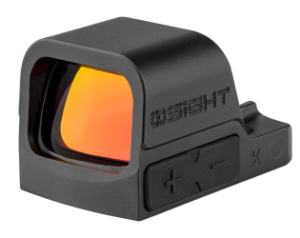
In the lineup of the best Red Dot for PDP Compact, OSIGHT K positions itself as an option for shooters who value a highly visible aiming point and quick target acquisition. Its open reflex design pairs with a 6 MOA red dot, giving the PDP Compact a more prominent aiming reference than the smaller dots found on many pistol optics.
That larger dot is the main reason to consider the OSIGHT K. A 6 MOA aiming point is quick to pick up during a rapid presentation, which can be useful when speed matters more than squeezing the finest possible aiming point from the sight. The low-deck profile also allows co-witnessing with factory iron sights when the mounting arrangement is compatible, adding another practical advantage for a compact pistol setup.
OSIGHT K uses an RMSc footprint, making it suited to slides cut for that interface. If your PDP Compact has a different optic cut, an adapter plate is required, so checking compatibility before purchase is important. Its 7075 aluminum housing keeps the optic compact and lightweight without abandoning a rugged metal construction.
Operation is refreshingly straightforward. A motion sensor activates the reticle when movement is detected and switches the sight off after three minutes of inactivity to conserve battery power.
The side-loading battery compartment also lets you replace the CR1620 without removing the optic from the slide, while a low-battery warning flashes the reticle three times at regular intervals when the battery voltage drops below the specified level.
Pros
- 6 MOA dot
- Low-deck profile
- RMSc footprint
- Side-loading battery
- Motion activation
Cons
- Open-emitter design
5) Trijicon SRO Adjustable LED 5.0 MOA Red Dot
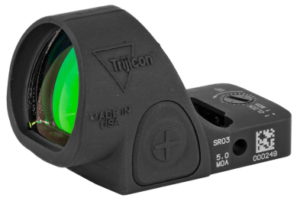
Trijicon SRO is built around one clear priority: keeping the aiming point easy to find when speed matters. Its large, unobstructed field of view gives the shooter more visual space around the 5.0 MOA dot, while the crisp illuminated reticle makes the aiming point easy to track through repeated presentations. Trijicon specifically positions this reticle size for applications where speed and recovery of the dot are critical, including competitive shooting.
That generous window gives the SRO a different feel from more compact pistol optics. The sight is parallax-free and compatible with suppressor-height iron sights, so it can work well on a PDP Compact setup where a broad sight picture and visible backup sights are both useful. The 5.0 MOA dot also favors quick acquisition rather than fine aiming at extended distances.
The SRO keeps its controls straightforward. Windage and elevation can be adjusted without a separate tool, making zeroing less cumbersome when changes are needed. Eight brightness settings are available, with both manual and automatic LED modes giving you control over the dot in changing conditions. Its top-loading CR2032 battery can also be replaced without removing the optic from its mount, with Trijicon rating it for up to three years of battery life at setting 4.
For a PDP Compact owner, mounting compatibility is another reason to consider the SRO. It shares the same footprint as the Trijicon RMR, allowing it to mount on compatible RMR-pattern bases and optic-ready configurations. That makes the SRO a particularly practical option when the goal is to combine a large sight picture and fast 5.0 MOA dot with a familiar pistol-optic mounting interface.
Pros
- Large, unobstructed viewing window
- Crisp 5.0 MOA dot
- RMR footprint
- Tool-less adjustments
- Manual and automatic brightness modes
Cons
- Open reflex design
6) Vortex Defender-ST 2 MOA Sight
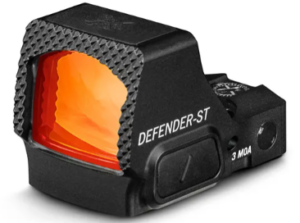
A large viewing window can make a noticeable difference on a compact pistol, particularly when fast target acquisition is part of the equation.
Vortex Defender-ST takes that idea seriously with a wide sight picture designed to give the eye more room to find the illuminated dot. Its aspherical lens also helps maintain a clear, distortion-free view with more natural-looking colors.
Durability is another major part of the Defender-ST’s identity. A single-piece chassis provides a compact foundation, while the ShockShield polymer insert adds protection against the knocks and abuse that can come with regular use.
The optic is also waterproof, fogproof, and shockproof, giving it the kind of all-weather construction that makes sense for a pistol expected to work beyond controlled range sessions.
That combination puts the Defender-ST in an interesting position within the best Red Dot for PDP Compact category. It is not built solely around having the smallest possible footprint; instead, it gives considerable attention to how quickly the shooter can interact with the sight.
The textured Fast-Rack surface is a good example, allowing the slide to be manipulated against the optic when necessary without relying on a separate contact point.
Vortex also keeps the controls practical. Ten daylight-bright settings provide flexibility in bright conditions, with the lowest two settings compatible with night vision. Motion activation brings the dot on when movement is detected, while the 10-minute automatic shutoff helps preserve battery life.
In addition, button lockout can prevent accidental brightness changes during transport or use, and the top-mounted battery allows replacement without removing the optic and losing its zero.
Pros
- Aspherical lens
- Fast-Rack textured grip
- Large viewing window
- ShockShield protection
- Night-vision compatible
Cons
- Open-emitter design
How to Choose the Best Red Dot for PDP Compact
Choosing a red dot for the PDP Compact involves more than finding an optic that fits the slide. The design of the sight can affect how quickly you find the dot, how well it handles everyday conditions, and how naturally it integrates with the pistol.
Open vs. Enclosed Emitter
One of the biggest choices is whether you want the emitter exposed or protected inside the optic. Open-reflex sights leave the emitter exposed, which allows for compact designs and can contribute to a more open sight picture. Enclosed optics, on the other hand, place the emitter inside a housing that helps shield it from dirt, moisture, and debris.
For a PDP Compact used primarily at the range, an open emitter may provide everything you need without adding unnecessary bulk. An enclosed sight becomes more compelling when the pistol will regularly encounter dust, rain, or other conditions that could interfere with an exposed emitter. Neither design is automatically better; the more useful question is how much protection your intended use actually calls for.
Height and Iron-Sight Relationship
How high the optic sits above the slide can affect both the sight picture and your relationship with the pistol’s existing iron sights. A low-profile optic may allow the irons to remain visible through or beneath the window, giving you a useful backup reference and potentially making the transition between sighting systems more intuitive.
This is worth checking alongside the height of your particular iron sights. An optic may be advertised as compatible with suppressor-height sights or capable of co-witnessing, but the actual result depends on the combination of optic, mounting plate, and iron-sight height.
Controls and Battery Access
Good controls should be easy to operate when you need them and difficult to activate accidentally. Brightness buttons, automatic activation, lockout functions, and similar features can all influence how convenient the sight is to live with. Battery access matters for the same reason: top- or side-loading compartments allow routine replacement without necessarily removing the optic from the pistol.
You don’t need the longest advertised battery life simply because it sounds impressive. Consider how the sight manages illumination, how easily you can check or replace its battery, and whether those features fit the way you actually use the pistol.
Window Size and Dot Size
A large viewing window can make the reticle easier to locate during a fast presentation. It gives the eye more visual space and can be particularly attractive for shooters who place a premium on speed.
The tradeoff is that a larger optic can add to the overall profile of the pistol, so window size should be considered alongside the dimensions of the sight itself.
Dot size presents a separate decision. Smaller dots can provide a finer aiming reference when precision matters, whereas larger dots tend to be easier to see and pick up quickly.
That difference becomes particularly noticeable across this group of sights, where the options range from smaller dots to 5 and 6 MOA aiming points. Think about where you are most likely to shoot and how quickly you need to acquire the reticle before deciding which size makes the most sense.
Mounting Compatibility
Mounting compatibility is one area where getting the purchase wrong can leave you with an otherwise excellent optic that does not work with your setup. The footprint of the sight needs to correspond with the slide cut or optic plate, and an adapter may be required when those interfaces do not match directly.
Check the footprint before buying rather than assuming that an optic designed for compact pistols will automatically fit the PDP Compact. RMR and RMSc are both common pistol-optic interfaces, but they are different standards.
The mounting arrangement also affects optic height, so confirming the complete combination can prevent surprises after the sight arrives.
Durability and Intended Use
Think about the life you expect your optic to have. A sight used mainly for range sessions may not need the same level of protection as one carried regularly, exposed to harsh weather, or subjected to frequent impacts. Construction materials, shock resistance, waterproofing, fogproofing, and emitter protection become more important as the demands placed on the pistol increase.
There is also a practical balance to strike. A highly protected optic can make sense when reliability in difficult conditions is the priority, but a shooter who spends most of their time training in controlled environments may place greater value on a lighter or more compact design.
Price and Value
Price should be the final filter rather than the starting point. Once you know which emitter design, sight picture, mounting system, controls, and durability level suit your PDP Compact, it becomes much easier to decide whether a higher-priced optic offers something you will actually use.
A cheaper sight is not automatically the better value, just as the most expensive option is not automatically the best choice. The better purchase is the optic whose features solve the problems you actually have without making you pay for capabilities that add little to your particular setup.
Best Red Dot for PDP Compact FAQs
What Red Dot Footprint is Best for a PDP Compact?
There is no single footprint that is best for every PDP Compact setup. The key is matching the red dot footprint to the slide cut or mounting plate on your pistol. RMR and RMSc are common interfaces for pistol optics, but they are different standards and may require a specific plate or adapter. Checking the exact mounting configuration before buying can help ensure the sight fits properly and sits at the desired height.
What Size Red Dot is Best for a PDP Compact?
A 2 or 3 MOA red dot offers a useful balance between a precise aiming point and quick acquisition. Larger options, such as 5 or 6 MOA, are easier to see and pick up quickly, making them attractive when speed matters most.
Smaller dots provide a finer aiming reference, which can be useful when precision is a greater priority. Consider your typical shooting distance and whether you value faster acquisition or a more precise aiming point.
Is an Enclosed or Open Emitter Better for a PDP Compact?
Neither is automatically better; the right choice depends on how you intend to use your PDP Compact.
An enclosed emitter protects the aiming system from dirt, moisture, and debris, making it more appealing for demanding conditions. An open emitter can offer a more compact design and unobstructed sight picture, which may be perfectly adequate for controlled range use.
Think about the conditions your pistol will encounter and how much protection you actually need before choosing between the two.
Final Thoughts
We hope this guide has made your search for the best Red Dot for PDP Compact a little easier and helped you narrow down the options that make the most sense for what you’re looking for.
With the right optic in hand, you can get more out of your PDP Compact without making the choice more complicated than it needs to be.
Read more: