
In today’s post, we’ll dive deep into the photography drones. Photography drones have become increasingly popular among photographers, filmmakers, travelers, and content creators. This is thanks to their ability to capture unique aerial photos and videos with ease. Modern drones bring to the table impressive camera quality, intelligent flight features, longer battery life, and improved portability. All these features make them suitable for both beginners and professionals.
However, the market is flooded with a plethora of options. This means that choosing the best photography drone can be challenging. Different drones are designed for different needs. Some focus on portability and ease of use, while others prioritize advanced camera performance and professional video capabilities. Understanding the key features and differences between these drones can help you find the right option for your photography and videography needs.
Best Photography Drones
1) DJI Mini 5 Pro
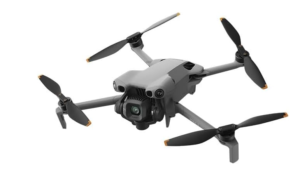
The DJI Mini 5 Pro is a compact and foldable palm-sized drone built for travel and convenience. It slips easily into a pocket while still offering an impressive 42GB of internal storage for uninterrupted shooting in the field.
As the first product on our list of the best photography drones, it features a powerful 1-inch CMOS sensor. The sensor captures stunning 4K/60fps HDR video, delivering sharp detail, rich dynamic range, and vibrant colors that elevate both cinematic footage and still photography.
Creativity is further enhanced through its True Vertical Filming mode and a 225° flexible gimbal rotation, allowing users to capture unique perspectives, dramatic angles, and social-media-ready vertical content without compromise.
Safety and confidence in flight are significantly improved with Nightscape omnidirectional obstacle sensing, combining forward-facing LiDAR and vision sensors to detect obstacles in all directions making night flights and return-to-home functions far more reliable.
For dynamic shooting, the upgraded ActiveTrack 360° system keeps subjects locked in with improved stability and responsiveness, making it ideal for fast-paced activities like cycling or action sports.
Battery performance is equally strong, offering up to 36 minutes of flight time per charge, with fast charging capable of powering three batteries in approximately 115 minutes. The package includes the DJI Mini 5 Pro drone, DJI RC-N3 remote controller, one battery, and spare propellers, ensuring a ready-to-fly experience right out of the box.
Pros
- Ultra-compact, foldable design with pocket-friendly portability
- 1-inch CMOS sensor with 4K/60fps HDR video for high-end image quality
- 42GB internal storage reduces reliance on external memory cards
- True vertical shooting and 225° gimbal rotation for creative flexibility
- Advanced omnidirectional obstacle sensing with LiDAR for safer flights
- Strong ActiveTrack 360° subject tracking performance
- Solid 36-minute flight time with fast multi-battery charging
- Ready-to-fly kit included with essential accessories
Cons
- Limited flight time compared to larger professional drones
2) Potensic Atom 2 Fly More Combo with RC PTD 1
The Potensic Atom is equipped with a 1/2″ Sony CMOS sensor capable of capturing 48MP photos and recording 4K/30fps HDR video through a stable 3-axis gimbal. With an F1.8 aperture, 4-in-1 pixel technology, and P-Log mode support, it delivers impressive detail, improved low-light performance, and rich, natural color grading for both photos and cinematic video.
Control and usability are significantly enhanced by the PTD 1 RC, which features a built-in 5.5-inch 1080p FHD touchscreen with 700 nits brightness, giving pilots clear visibility even in bright outdoor conditions.
The controller offers up to 3 hours of runtime, fast 27W charging, and seamless integration with the ATOM 2 for an intuitive, ready-to-fly experience. With PixSync 4.0 technology, the drone supports stable control and up to 10km transmission range with 1080p live video feed, ensuring reliable long-distance operation.
Additionally, the Atom 2 excels with AI-powered tracking modes such as Spotlight, Follow, and Parallel, making it easy to lock onto moving subjects for smooth cinematic shots. Its Night Shot capability enhances low-light performance.
On the other hand, features like 2.7K vertical shooting, 4x digital zoom, panoramic capture, Dolly Zoom, Slow Motion, CineRoll, and QuickShots provide a wide range of cinematic storytelling tools. The Fly More Combo further boosts usability with a 3-battery system offering up to 96 minutes of total flight time, supported by a charging hub that fully recharges all three batteries in about 1.3 hours.
For beginners, the Atom 2 is designed with safety and ease of use in mind, offering GNSS positioning, customizable home points, cruise control, auto takeoff and landing, and Smart Return-to-Home for reliable recovery in all conditions. Combined, these features make it a highly capable yet approachable drone for photography enthusiasts.
Pros
- 48MP stills and 4K/30fps HDR video with 1/2″ Sony CMOS sensor
- 3-axis gimbal ensures stable, smooth footage
- Bright 5.5-inch 1080p touchscreen RC with built-in display
- Long 10km transmission range with stable live feed
- Strong AI tracking modes
- Excellent creative video modes
- Fly More Combo includes 3 batteries for extended flight time (up to 96 minutes total)
- Fast charging hub (full recharge in ~1.3 hours for all batteries)
Cons
- Controller is only compatible with ATOM 2
3) DJI Mavic 4 Pro Done with DJI R C2
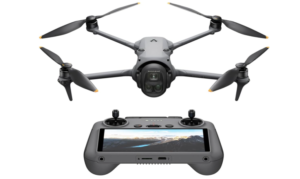
The DJI Mavic 4 Pro boasts a powerful 100MP Hasselblad main camera capable of recording stunning 6K/60fps HDR video. Besides that, it delivers extraordinary detail, color depth, and cinematic clarity that easily meets professional production standards.
Complementing this are dual telephoto cameras, which provide versatile zoom capabilities for crisp, detailed long-range compositions.
The 360° Infinity Gimbal enables fluid, unrestricted camera movement for dynamic cinematic shots. For low-light environments, the Mavic 4 Pro introduces advanced 0.1-lux Nightscape omnidirectional obstacle sensing, allowing the drone to safely detect and avoid obstacles even in near-dark conditions.
Performance is equally impressive, with up to 51 minutes of flight time, giving professionals extended airtime for complex or long-form shooting sequences without interruption. The drone also features O4+ transmission technology, delivering a robust 30km range with 10-bit HDR live video feed for ultra-stable, high-quality monitoring even at extreme distances.
Paired with the DJI RC 2 controller, featuring a 7-inch rotatable high-bright display that folds for portability, users gain precise, on-the-go control suited for demanding fieldwork.
Pros
- Exceptional 100MP Hasselblad main camera with 6K/60fps HDR video
- Dual telephoto cameras for versatile, high-quality zoom shots
- 360° Infinity Gimbal for smooth and dynamic cinematic movement
- Advanced low-light obstacle sensing for safer night flights
- Long 51-minute flight time for extended shooting sessions
- 30km O4+ transmission with 10-bit HDR live feed
- DJI RC 2 with large rotatable high-bright display for pro control
Cons
- Premium price
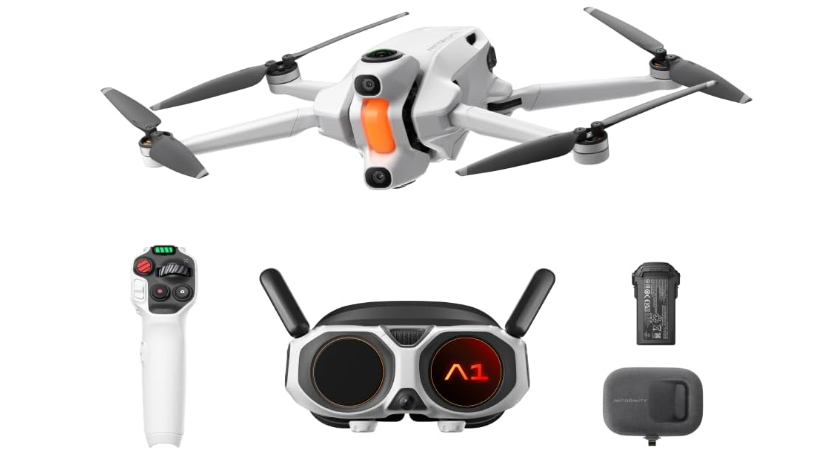
4) DJI Neo 2 Motion Fly More Combo with RC Motion 3 & Googles N3
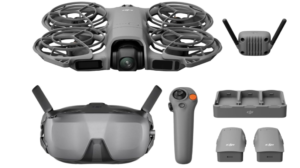
Next, we have the DJI Neo 2 Motion Fly More Combo with RC Motion 3 & Googles N3. It is a lightweight, beginner-friendly FPV-style photography drone designed for effortless flying, immersive control, and high-quality 4K capture.
Weighing just 151g and C0 certified, it is highly portable and safe to carry, with full-coverage propeller guards that add an extra layer of protection during transport and flight. Its compact form factor makes it ideal for travel, casual aerial photography, and quick everyday shooting without the complexity of larger drone systems.
In terms of usability, the Neo 2 excels with intuitive flight that make it one of the best photography drones. It incorporates features such as palm takeoff and landing, along with gesture control that allows hands-free operation for smooth, simple flying experiences.
The ActiveTrack system ensures reliable subject tracking, keeping your subject centered and in focus even during movement, while Apple Watch integration adds convenience by enabling live feed viewing, flight status checks, and even voice-based tracking adjustments.
For content creation, the drone captures crisp 4K video and detailed imagery, delivering sharp, lifelike results suitable for social media and casual filmmaking. Features like SelfieShot make it especially easy to capture quick, well-framed self-portraits or memorable moments with a single tap.
Safety is also a strong focus, with omnidirectional obstacle sensing and versatile flight stability features that help ensure smooth and confident operation in different environments.
The combo package enhances the experience further by including DJI RC Motion 3, DJI Goggles N3, a digital transceiver, three batteries, a charging hub, and propeller guards making it a complete FPV-ready kit for immersive flying straight out of the box.
Pros
- Extremely lightweight and highly portable design
- Full propeller guards for safer flying and transport
- Easy palm takeoff/landing and intuitive gesture controls
- Immersive FPV experience with Goggles N3 and RC Motion 3
- Reliable ActiveTrack subject tracking
- 4K high-quality video capture
- Useful Apple Watch integration for live view and control
- Includes full Fly More-style combo with 3 batteries and charging hub
Cons
- Limited to 4K (no higher resolution options like 5.4K/6K)
- Not designed for advanced cinematic production workflows
5) Loiley 2K HD FPV Drone
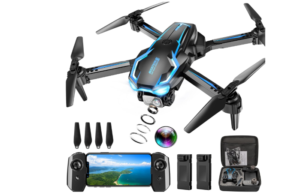
Last but not least on our list of the best photography drones is the Loiley 2K HD FPV Drone. The Loiley 2K HD FPV is equipped with a 2K Ultra HD camera and a 90° remotely adjustable lens. It captures clear aerial photos and videos ideal for scenic landscapes, travel moments, and casual family recordings.
With real-time FPV transmission via Wi-Fi, users can view live footage directly on their smartphone and share content instantly to social media, making it a convenient option for quick and engaging content creation.
Flight performance is designed with simplicity and stability in mind. One-key takeoff and landing make operation effortless, while altitude hold ensures steady hovering for more consistent shots. Optical flow positioning improves stability during indoor and outdoor flights, and features like headless mode and gravity sensing controls make navigation intuitive. This is so even for first-time pilots who prefer tilting the controller to guide movement.
Portability is one of its strongest advantages that makes it one of the best photography drones. The drone weighs under 250g, meaning no FAA registration is required in many regions. Its foldable design allows it to fit easily into a pocket or backpack, making it ideal for travel, hiking, and spontaneous shooting.
To support longer sessions, the package includes two rechargeable batteries providing up to 20 minutes of total flight time, along with low-voltage alerts and overcharge protection for safer operation. Added propeller guards and spare blades further enhance durability. Additionally, the ergonomic remote ensures precise control for both beginners and casual users.
Pros
- 2K HD camera with adjustable 90° angle for flexible shooting
- Real-time FPV transmission to smartphone via Wi-Fi
- Lightweight under 250g (no registration required in many regions)
- Foldable, ultra-portable design ideal for travel
- Easy controls with one-key takeoff/landing and headless mode
- Stable hovering with altitude hold and optical flow positioning
- Includes two batteries with decent total flight time
Cons
- 2K resolution is limited compared to higher-end 4K+ drones
- Short overall flight time compared to premium models
Selecting Best Photography Drones
Choosing the best photography drones involves carefully evaluating several important factors that directly affect image quality, flight performance, and overall user experience.
Image Quality
When choosing the best photography drones, image quality should be one of the top considerations. A drone with a high-resolution camera, larger image sensor, and the ability to shoot in RAW format will deliver sharper images, better dynamic range, and improved low-light performance.
Features such as adjustable aperture, HDR support, and high-quality video recording resolutions like 4K or 6K are also important for photographers and content creators who want professional-looking results.
Image Stabilization
Photography drones equipped with a reliable 3-axis gimbal produce smoother footage and reduce blurriness caused by movement or wind. This is paramount when capturing cinematic videos, tracking moving subjects, or shooting in outdoor environments where wind conditions may vary. Stable footage not only improves visual quality but also reduces the amount of editing needed afterward.
Flight Performance and Battery Life
Flight performance and battery life are equally important when selecting a photography drone. Longer flight times allow photographers to spend more time capturing content without constantly interrupting the session to recharge batteries.
A drone with strong wind resistance and stable hovering capabilities is also beneficial, especially for landscape and aerial photography. In addition, intelligent flight features such as obstacle avoidance, subject tracking, automated flight paths, and cinematic shooting modes are thoughtful additions. They make flying easier and help users capture more creative shots with minimal effort.
Portability
Portability is another factor many buyers consider, particularly travelers and outdoor content creators. Foldable and lightweight drones are easier to carry during trips and outdoor adventures without taking up much space. Ease of use also matters significantly, especially for beginners. User-friendly controls, intuitive mobile apps, GPS-assisted flight, and beginner safety features make operating the drone much simpler and safer for inexperienced pilots.
Durability
Also pertinent when selecting the best photography drones is the durability. A robust drone can better withstand minor crashes, rough landings, strong winds, and frequent travel. This makes it more reliable for outdoor photography and videography.
Drones with sturdy construction, strong motors, and well-protected components such as the camera and gimbal generally offer better long-term performance. Features like wind resistance, reinforced frames, and replaceable propellers are beneficial. They help improve the drone’s lifespan and reliability, especially when flying in challenging environments.
Other Reads:
- 6 Best Drones for Real Estate Photography
- 6 Best Hog Hunting Scopes for AR-15
- 5 Best Revolver Scopes
Budget and Intended Use
Finally, budget and intended use should help determine the right photography drone. Professional drones often come with advanced camera systems, extended flight capabilities, and premium intelligent features. However, they are usually more expensive.
Mid-range and beginner-friendly drones may still offer excellent image quality and reliable performance at a more affordable price. Understanding whether the drone will primarily be used for travel photography, wildlife photography, real estate content, filmmaking, or recreational aerial shots can help narrow down the best option based on specific needs and priorities.
Best Photography Drones FAQs
Are DJI Drones Ideal for Photography?
DJI drones are widely considered among the best photography drones because of their advanced camera systems, intelligent flight features, and strong overall reliability. Models like the DJI Mavic and Air series are especially popular among photographers and filmmakers.
How Much Flight Time Should a Photography Drone Have?
Most quality photography drones offer between 25 and 50 minutes of flight time per battery. Longer flight times allow photographers to capture more footage and spend more time composing shots without frequent battery changes.
Why is a 3-Axis Gimbal Essential?
A 3-axis gimbal stabilizes the camera during flight, helping reduce blur and shaky footage. This results in smoother videos and sharper photos, especially when flying in windy conditions or tracking moving subjects.
Conclusion
The best photography drones offer impressive capabilities for every skill level and purpose. By carefully considering factors such as sensor size, stabilization, battery life, intelligent flight modes, and overall reliability, you can invest in a drone that perfectly matches your photography and videography needs. The right photography drone not only enhances creativity but also opens up endless opportunities to capture stunning perspectives from the sky.